
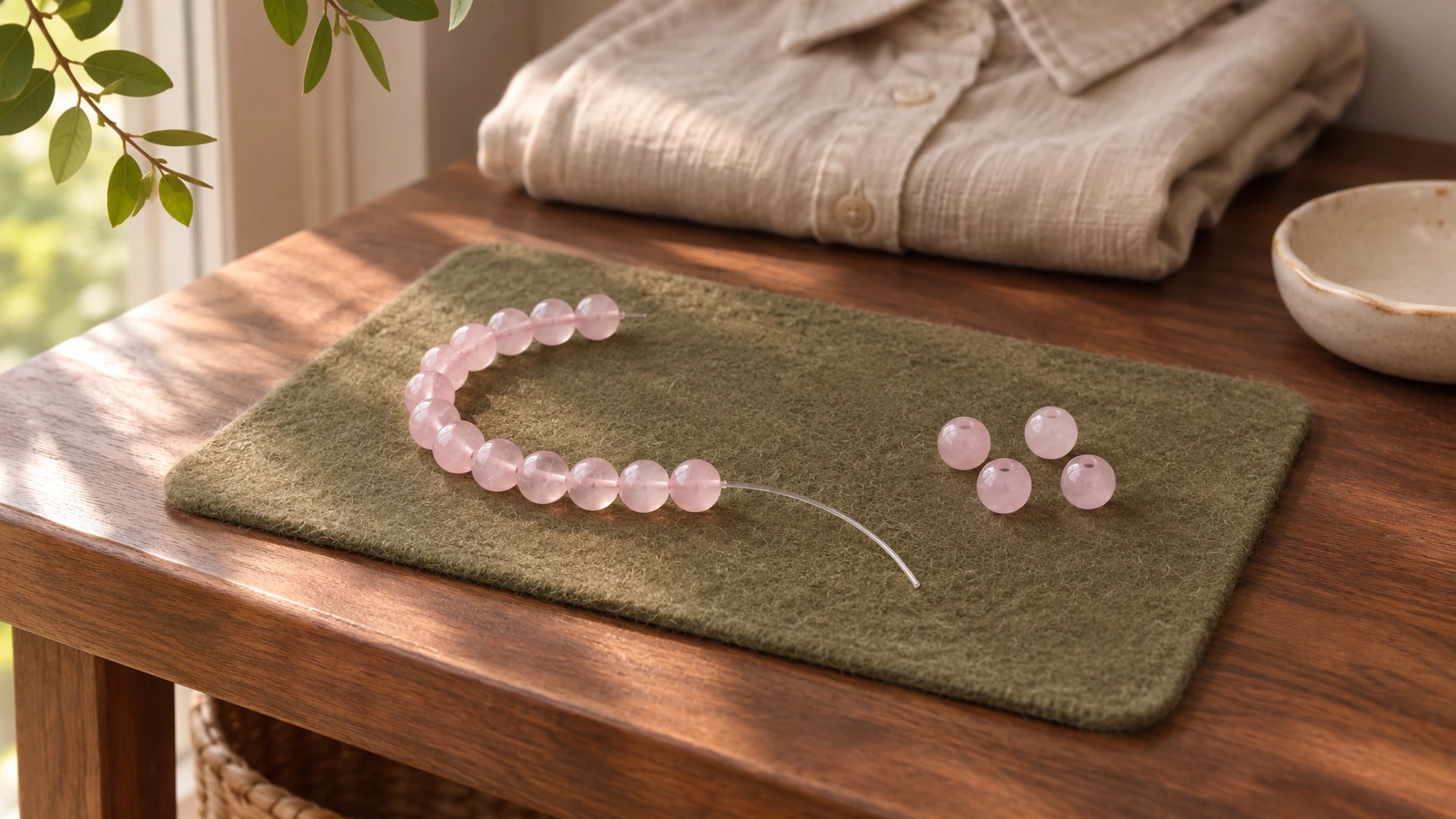
One second you’re pulling on a cardigan. The next, you’re looking under the chair for that last bead. If your crystal bracelet broke, especially one you wear often or received as a gift, the little snap can feel surprisingly personal.
Here’s the useful answer first: a broken cord is not evidence that something bad is coming, or that the bracelet has used up its purpose. If the beads and other components are still sound, restringing may let you keep wearing it. Start by saving the pieces and working out what actually failed. You can decide what the moment means to you afterward.
This guide is for that slightly deflated, beads-in-your-hand moment: what to keep, what to inspect, when a simple restring makes sense, and when to hand the little bag of pieces to someone who repairs jewelry.
What does it mean when your crystal bracelet breaks?
It can mean something needs attention: the cord, the knot, a fitting, a bead, or the way the piece fits. The break alone doesn’t tell you which one.
You’re certainly not the only person wondering whether there’s more to it. In a Reddit discussion about a new bracelet, someone asked whether it was okay to restring the beads. A separate tiger’s-eye bracelet discussion asked about meaning after the beads scattered during an ordinary day. It’s an understandable question when a small thing you enjoy suddenly comes apart.
If you enjoy crystal symbolism, you might choose to make a repair a small marker of change. That’s a personal interpretation, not a diagnosis. You don’t have to throw away a favorite piece, fear a prediction, or purchase a replacement to respond to it.
And if it was a gift? Replacing its cord doesn’t erase who gave it to you.
First, save the pieces
No need to solve the whole thing while you’re halfway out the door. A small dish, a soft cloth and a quick photo are a perfectly good start.
- Gather the beads and small metal parts. Use a tray or a folded cloth to stop them rolling away. Keep small parts and any sharp fragments away from children and pets.
- Keep the old cord, too. The broken ends and any knot can help a repairer understand the original construction. Put everything in a little bag rather than sweeping the less glamorous bits into the trash.
- Photograph the original order. If part of the strand is still together, take the picture before removing more beads. A simple color sequence is surprisingly easy to forget.
- Separate anything visibly damaged. Set aside cracked or chipped beads, bent fittings and loose decorative parts for inspection. Don’t put a sharp bead back against your skin just to complete the pattern.
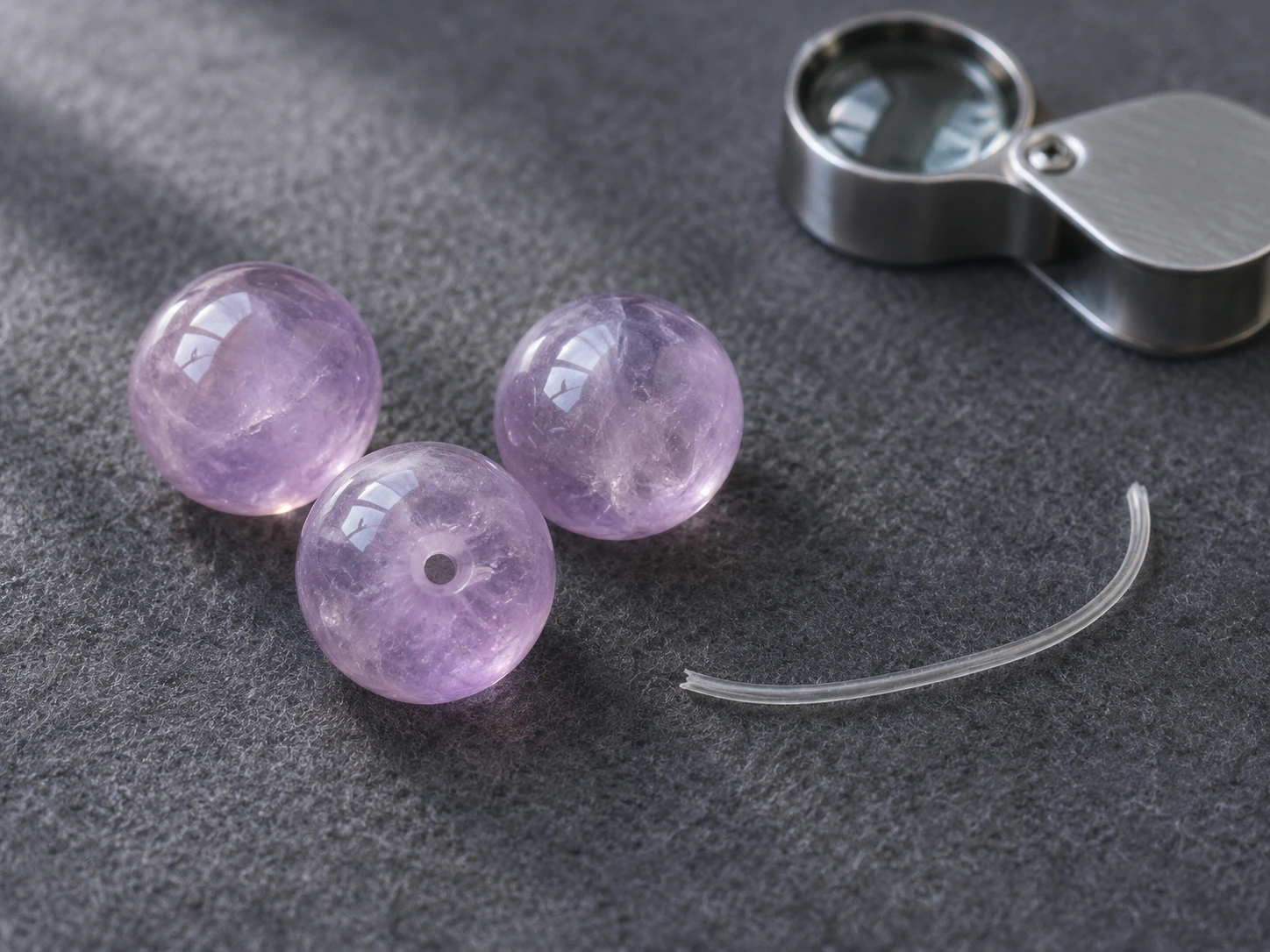
Your crystal bracelet broke: did the string or a bead fail?
These are different repairs. Look at what is in front of you rather than assuming the word “crystal” explains the problem.
- A cord snapped: you may have two broken ends, fraying on a fibrous cord, or visible wear. The beads can still be usable, but they need checking.
- A knot opened: the cord may look mostly intact while beads have slipped off an end. The finishing method matters here.
- A clasp, ring or wire failed: treat it as that kind of jewelry construction. Instructions for an elastic bracelet won’t necessarily apply.
- A bead chipped or cracked: replacing the cord won’t repair the bead. Have the damaged component assessed before wearing it again.
One helpful distinction from GIA’s guide to gem durability: hardness concerns scratching, while toughness concerns resistance to breaking. Neither gives an elastic bracelet a lifetime guarantee. A stone’s Mohs number also cannot tell you why its string failed.
A phone photo may help a maker spot something worth examining. It cannot reliably establish every hidden crack, bead-hole edge or cord problem.
Can you restring a crystal bracelet and keep wearing it?
Often, yes—if the components are in good condition and the construction is suitable. You can preserve the same pattern, replace a damaged component with an appropriate one, or have the bracelet adjusted so it suits your wrist better.
For a straightforward elastic strand, this is a sensible preparation checklist:
- Inspect before buying cord. Let a skilled maker assess damaged beads or rough holes before reusing them.
- Confirm the finished fit. Measure your wrist and discuss the inside fit you want. Bead diameter, strand length and wearable circumference are different measurements. Our wrist-measuring guide helps separate them.
- Match the cord to the design. Don’t force thicker cord or extra strands into holes they don’t comfortably fit.
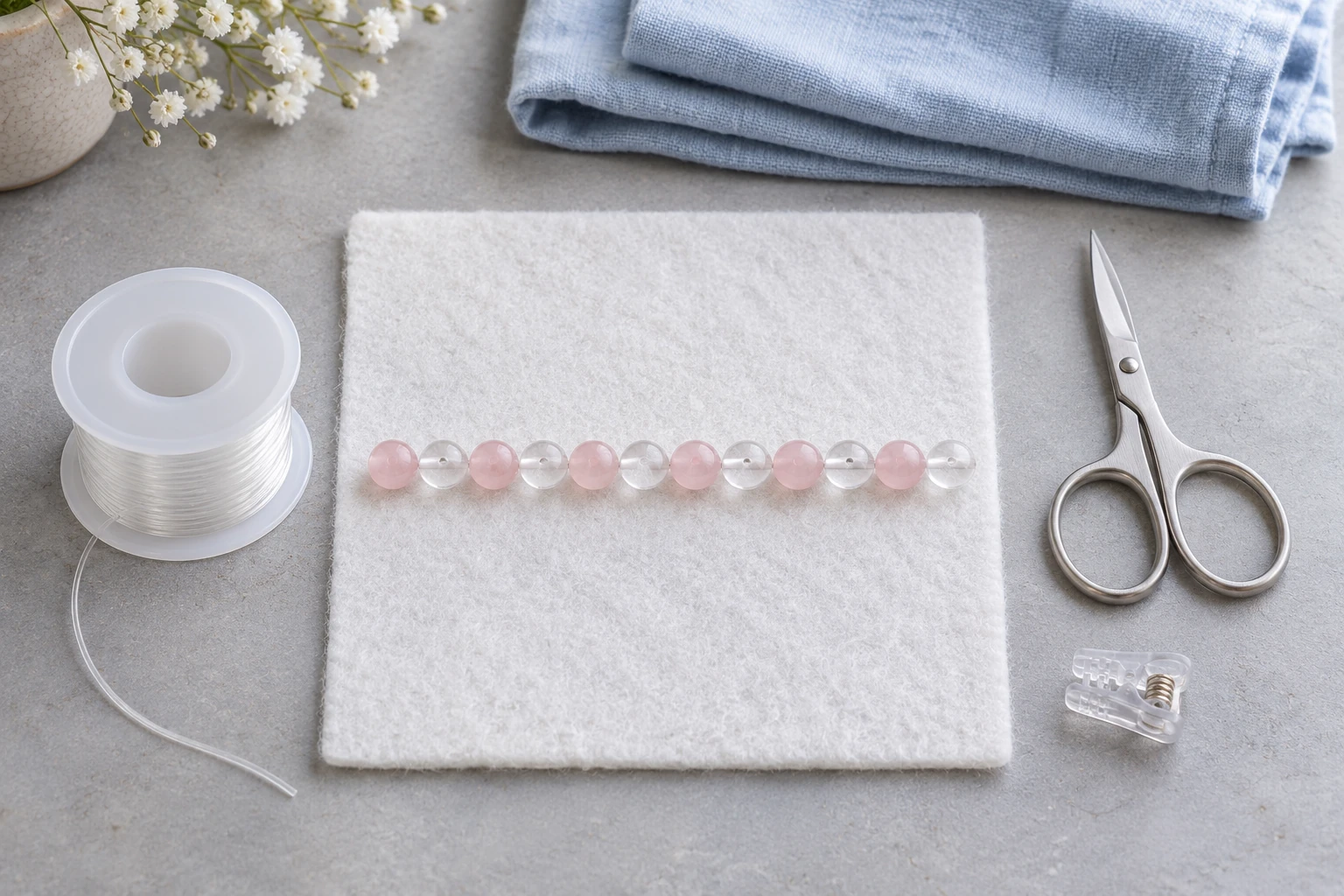
- Lay out the pattern first. Check the order and whether a missing bead changes the fit before tying anything permanently.
- Follow the cord maker’s finishing instructions. Use its specified knot and any compatible adhesive, including the required drying time.
- Check the finished piece gently before wearing it. If the knot slips, the strand puckers, or the fit puts everything under tension, pause and have the assembly checked.
Fire Mountain Gems’ elastic-cord guidance explains why wrist size, bead size and enough cord for handling all matter. It also distinguishes a little assembly tension from pulling so tightly that beads pucker. Those details are more useful than choosing a repair length because it worked for someone else’s wrist.
If the bracelet is especially meaningful, unusually valuable, or simply fiddly enough to make this an unpleasant afternoon, asking a jewelry repairer is a good choice. You can ask for an assessment and quote before deciding.
Why does my crystal bracelet keep breaking?
A second or third break is a reason to investigate the design. Repeating the same repair with a new spool may leave the underlying problem untouched.
Beadalon’s technical FAQ discusses edges that abrade stretch cord, rough bead holes and pinched cord. Those are possible inspection points, not a diagnosis of your bracelet. Its finishing advice is specific to its materials.
Bring the old pieces and a note of what happened. A repairer can investigate the construction; you don’t have to decide that the stone is “rejecting” you.
A jewelry-making discussion about repeated breakage captures that frustration well: several repairs, a sentimental bracelet, and an owner hoping to keep it. Before another attempt, it’s reasonable to ask what needs a closer look.
There isn’t one honest “replace the cord every X months” rule for every material, construction and wearing routine. Visible wear, repeated loosening or another break deserves attention whenever it happens.

Keep the memory. Give the design a little room to change.
You may want the bracelet back exactly as it was. Fair enough. Sometimes the familiar arrangement is the part you love.
Or perhaps one bead is missing and you’d rather rethink the pattern than hunt endlessly for a near-match. A maker can help you consider a suitable spacer, a revised sequence or a different construction. Keeping a single meaningful bead as a keepsake is an option, too. There’s no requirement to turn it into another wearable piece immediately.
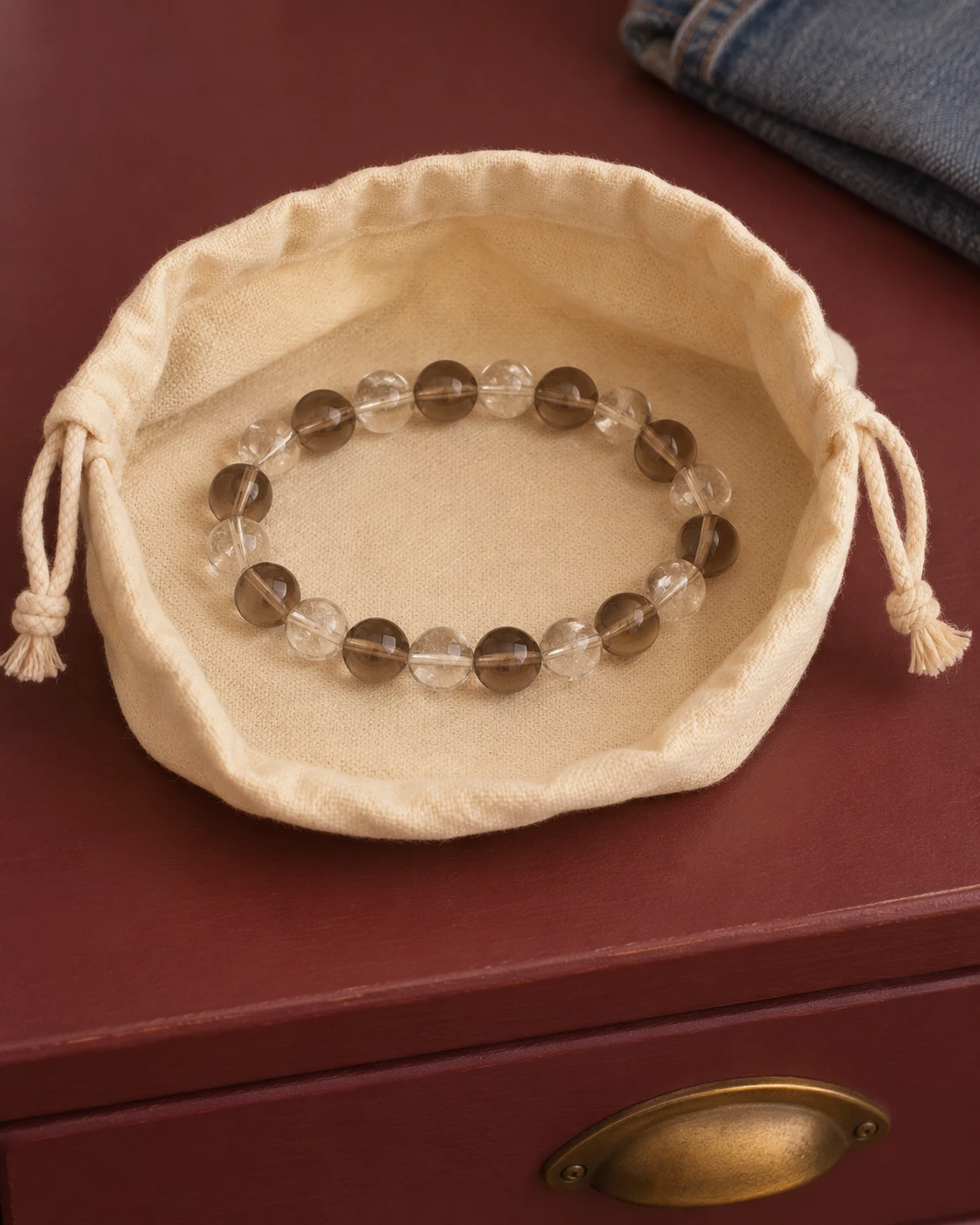
For color inspiration, WOOXING’s Amethyst Bracelet with Gold-Tone Charm pairs purple amethyst with gold-tone decorative details. The Smoky & Clear Quartz Bracelet with Silver-Tone Accents offers a quieter brown-and-clear palette. Both are finished bracelet designs to browse for ideas.
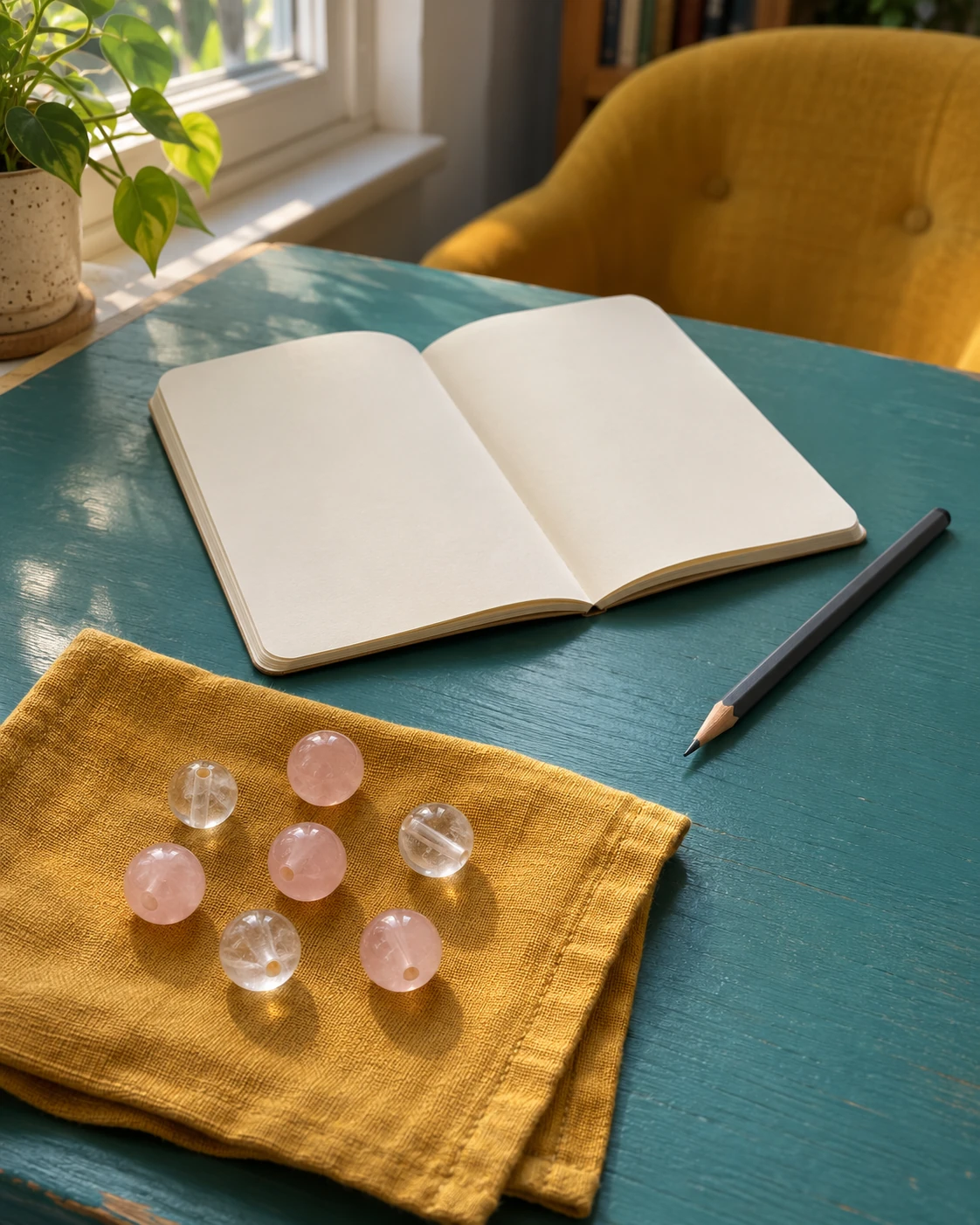
Try a two-minute pause before making a choice. Put the saved beads on a cloth. Think about what you liked: the color, the person who gave it to you, the weight on your wrist, or simply how it looked with your favorite shirt. Write down one thing to keep and one thing you’d change. That’s enough of a ritual if you want one.
A few easy habits after the repair
Care for the whole bracelet, including its string, fittings, finishes and any treated beads. A cleaning method that suits one loose gemstone may not suit the assembled piece.
Keep it out of activities where it repeatedly snags or knocks against hard surfaces. Avoid testing its stretch by pulling it far apart, and follow the maker’s advice for putting it on and taking it off. Store it separately so it isn’t tangled with sharper jewelry. GIA’s jewelry-care guidance is a useful reminder that storage, chemicals and the particular materials all matter.
For day-to-day habits, see our crystal bracelet care guide. If your question is about showers or getting it wet, the water-and-bracelet guide covers that separately.
The questions people ask after a bracelet breaks
Is it bad luck if a crystal bracelet breaks?
Breakage isn’t evidence of bad luck or a prediction. You can attach personal meaning to the moment while checking the ordinary condition of the jewelry.
Should I throw away the beads?
You don’t need to discard sound beads solely because a cord broke. Save them, separate damaged pieces and have their condition checked before reuse.
Does a broken bracelet mean the crystals are fake?
No. A failed cord doesn’t identify the beads. Material identification and the condition of the bracelet’s assembly are separate questions.
When you’re ready to think about the next design
Start with what you want to wear, rather than what you feel a broken bracelet obliges you to replace. Perhaps that’s your original beads on a sound new cord. Perhaps it’s a different color balance or a fit that works better with your everyday clothes.
If you’d like to explore a separate custom design, try the WOOXING bracelet designer. Bring a simple brief: the colors you love, your wrist measurement, and how you actually wear jewelry. Check the available components and finished specifications before ordering.
Crystal symbolism is a personal interpretation, not medical, financial or psychological advice. The images in this article are AI-created editorial illustrations, not photographs of a diagnosed fault, a completed repair or a specific WOOXING product.
Sources and further reading
- GIA: understanding gemstone durability — hardness, toughness and stability.
- Beadalon: technical FAQs for cord and construction — product-specific finishing guidance and possible abrasion or pinching issues.
- Fire Mountain Gems: choosing elastic-cord length — wrist size, bead size and assembly tension.
- GIA: caring for jewelry — material-aware care and storage.
Research and WOOXING product references checked November 5, 2026. Linked Reddit discussions informed the reader questions; their comments are not used as gem identification or technical proof.