
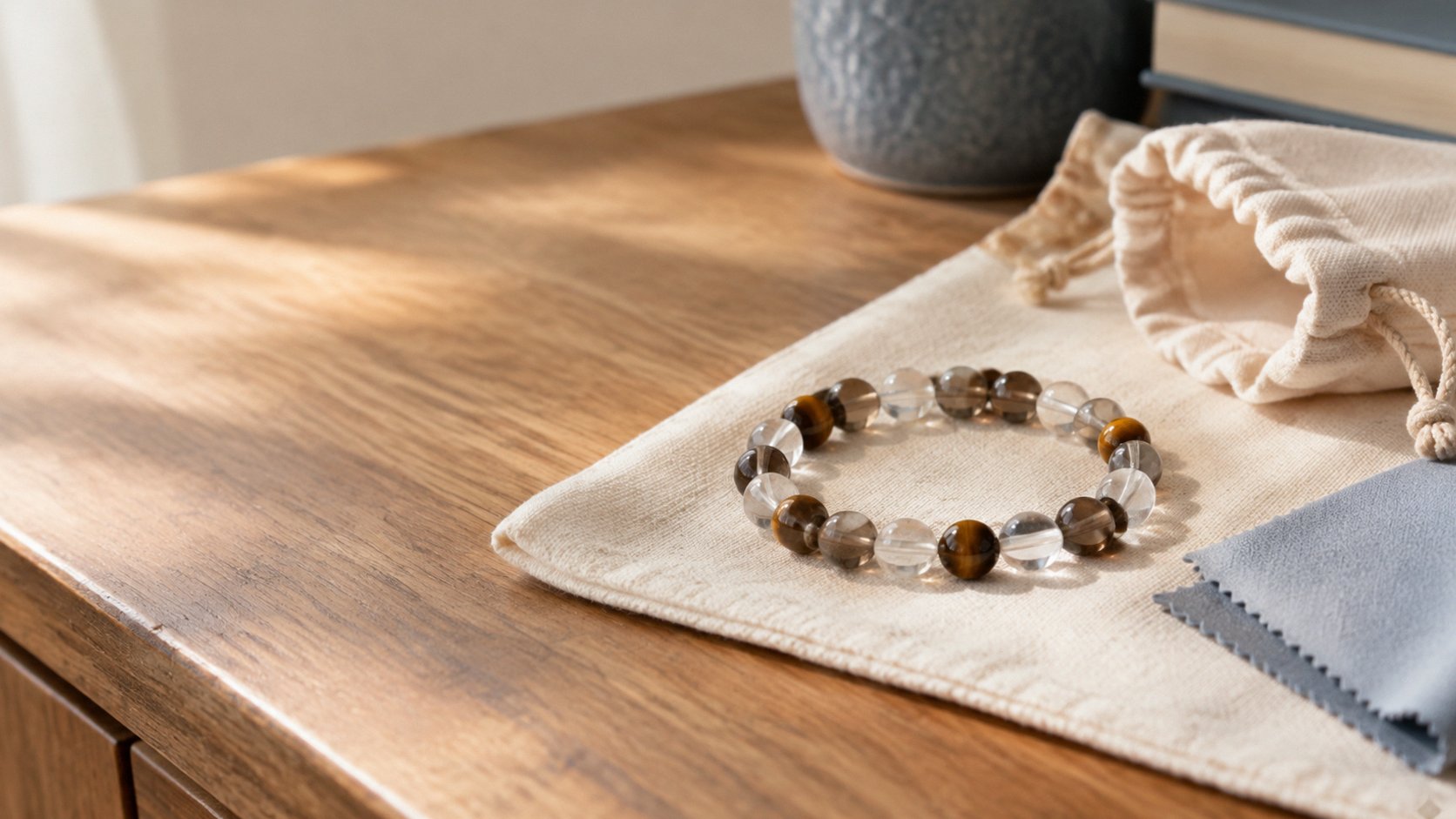
For everyday crystal bracelet care, use a simple routine: remove it for unsuitable activities, wipe gently after wear, store it separately and check the stringing. For deeper cleaning, follow the instructions for the complete piece.
The good news is that crystal bracelet care does not need to be complicated. The only catch: gemstones are not all built the same. A clear quartz bead, a porous turquoise bead, a treated stone, a metal spacer, and an elastic cord may all need slightly different handling. When you are unsure, choose the gentlest option and check the material details first.
The easy four step routine
Think of it as wear, wipe, store, and check. It is simple enough to do without turning your jewelry drawer into a science project.

Wear with a little space
Put your bracelet on after perfume, hair spray, sunscreen, lotion, and makeup have settled. Take it off before swimming, showering, working out, cleaning, or using household products. This is especially helpful when a bracelet includes delicate, porous, coated, dyed, or treated materials, or metal details that may dislike moisture and chemicals. The Canadian Jewellers Association's care advice supports removing jewelry for bathing, rough activities and chlorine pools, and putting it on after cosmetics.
Wipe it after you wear it
After a normal day, a soft, clean, lint-free cloth is usually the best first move. Gently wipe the beads, metal details, and the area around the elastic. This lifts away skin oils and everyday residue without asking you to guess whether a particular stone can handle a deeper clean.
Store it separately
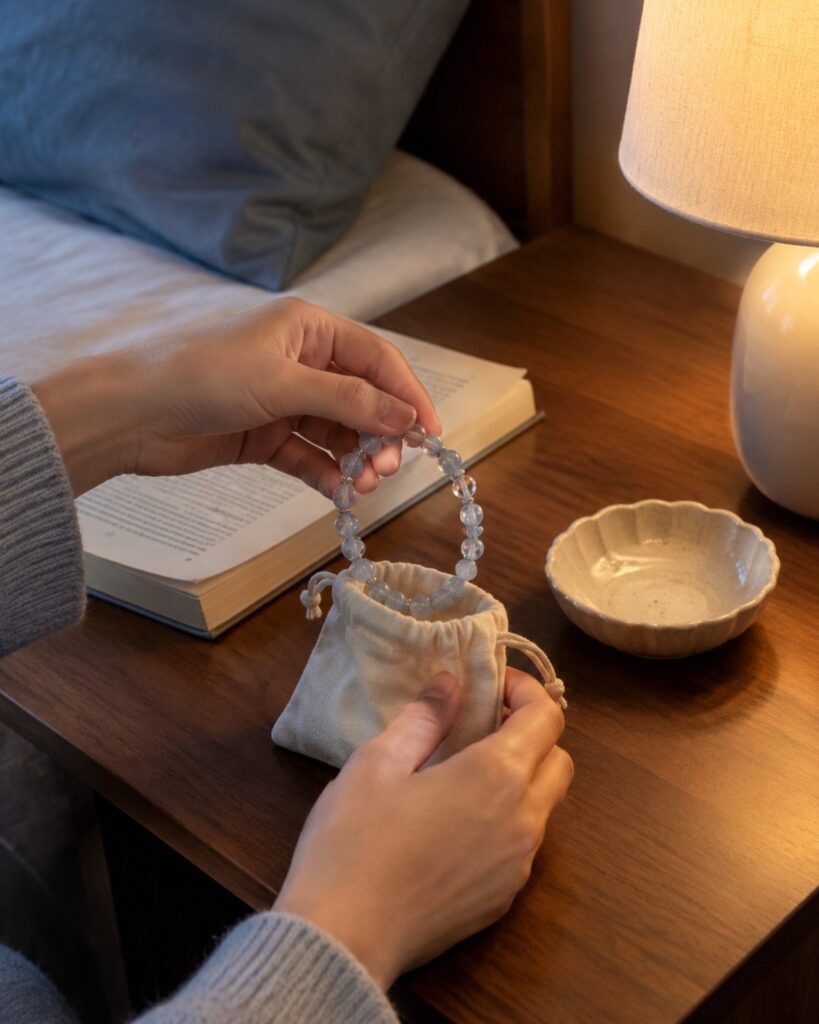
Keep your bracelet in its own soft pouch, lined compartment, or small box when you are not wearing it. Letting jewelry rub together can scratch softer materials and create unnecessary wear on polished beads. A pouch is also a much calmer travel solution than letting a bracelet roll around in the bottom of a tote.
Check the material before you clean deeper
If your bracelet needs more than a quick wipe, pause before using water, soap, a brush, steam, or an ultrasonic cleaner. Some materials and treatments can be sensitive to heat, chemicals, vibration, or soaking. Your product information is the best starting point. If you do not know the bead material or treatment, stick with the dry-cloth approach and ask the seller for guidance. GIA's jewelry-care guide explains why treatments, heat, chemicals and ultrasonic cleaning need particular care.
Why gentle care matters
“Crystal bracelet” is a style category, not a single material. Some beads are fairly durable for regular wear, while others are softer, porous, light-sensitive, treated, or more likely to react to strong cleaners. Fragrance, chlorine, ammonia-based cleaners, high heat, and direct long-term sun exposure can be a lot for certain gems and jewelry components.
That is why a general care article should never promise that every bracelet is safe to soak or clean the same way. A gentle wipe and separate storage are useful habits across many styles. Anything more specific should follow the individual material description.
A quick note on favorite bead types
Clear quartz, tiger’s eye, and many agate-style designs are often chosen for everyday color stories, but they still deserve a soft touch and a little distance from chemicals. Be extra conservative with bracelets that include pearls, opal, turquoise, lapis lazuli, malachite, fluorite, amber, or visibly coated or treated beads. These materials may need more specific care, so use a dry cloth first and follow the item-level guidance.
If the elastic feels stretched, fuzzy, rough, or less springy than it used to, that is your sign to pause and check it. A bracelet should feel secure on your wrist, not like it is one busy day away from a dramatic exit.

Care is part of the design story
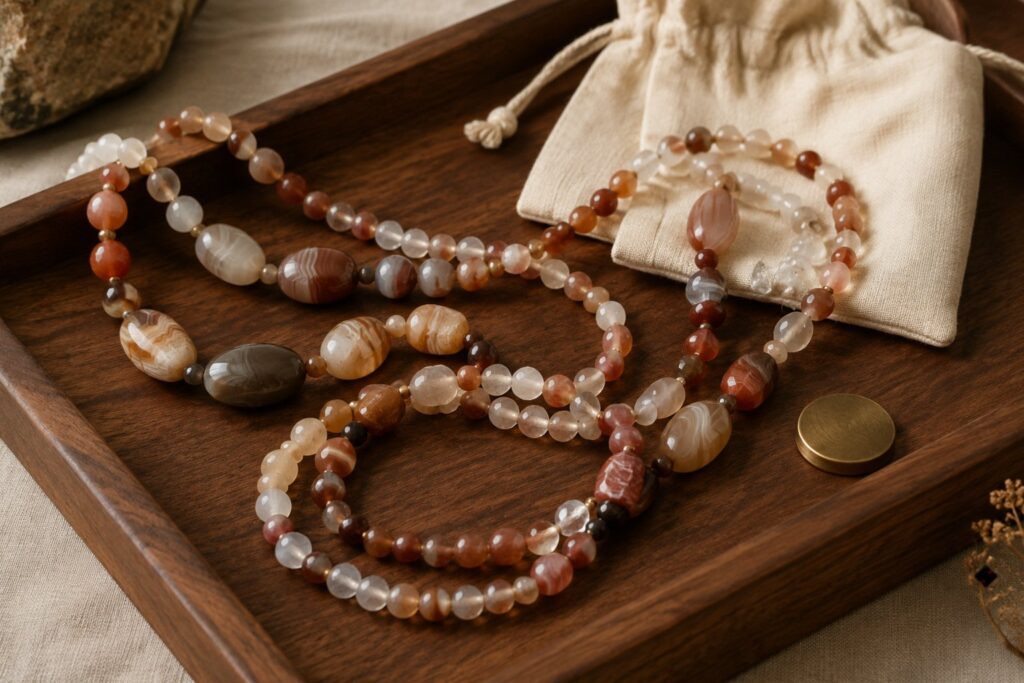
The Met records a group of agate and quartz beads dated to the fourth–fifth century and attributed to Egypt. It is a documented example of bead adornment, not a cleaning instruction for a modern elastic bracelet. Care should follow the materials and construction of the piece you own.
A three minute reset before you put it away
At the end of the day, take the bracelet off, wipe it gently, and place it in its pouch. While you do, notice one moment from the day you want to keep and one thing you are ready to leave behind. No big ritual required. It is simply a small way to close the day with a bit more intention.
Build with everyday care in mind
When you design a custom crystal bracelet, think beyond the first photo. Choose bead sizes you will enjoy wearing, a palette that works with your wardrobe, and materials whose care instructions you understand. A simple, well-considered piece is easier to reach for again and again.
Explore the WOOXING DIY bracelet designer with care in mind. Check the currently offered materials, the finished fit and the instructions for all components before ordering.

Crystal bracelet care FAQ
Can I shower with a crystal bracelet?
Take it off before showering. The beads, treatments, cord and decorative parts may need different care. For accidental splashes and drying steps, see our crystal bracelet water-care guide.
Can I use an ultrasonic cleaner?
Do not assume it is safe. Ultrasonic cleaning can be unsuitable for some treated, coated, filled, porous, soft, or heat-sensitive gems. Check the exact material guidance first.
How should I store a gemstone bracelet?
Store it separately in a soft pouch, lined compartment, or small box so the beads do not rub against other jewelry.
What if I do not know what the beads are?
Use a dry, soft cloth and ask the seller for material details before trying water, cleaners, heat, or a cleaning device.
Disclosure: Crystal symbolism is personal and is not medical, financial, or psychological advice.
Care should follow the whole design. The amethyst bracelet with a gold-tone charm combines stones and decorative accents; the aquamarine bracelet with a flower charm also includes clear quartz and shell beads. Read their individual instructions and our sunlight and storage guide before choosing where to keep them.