
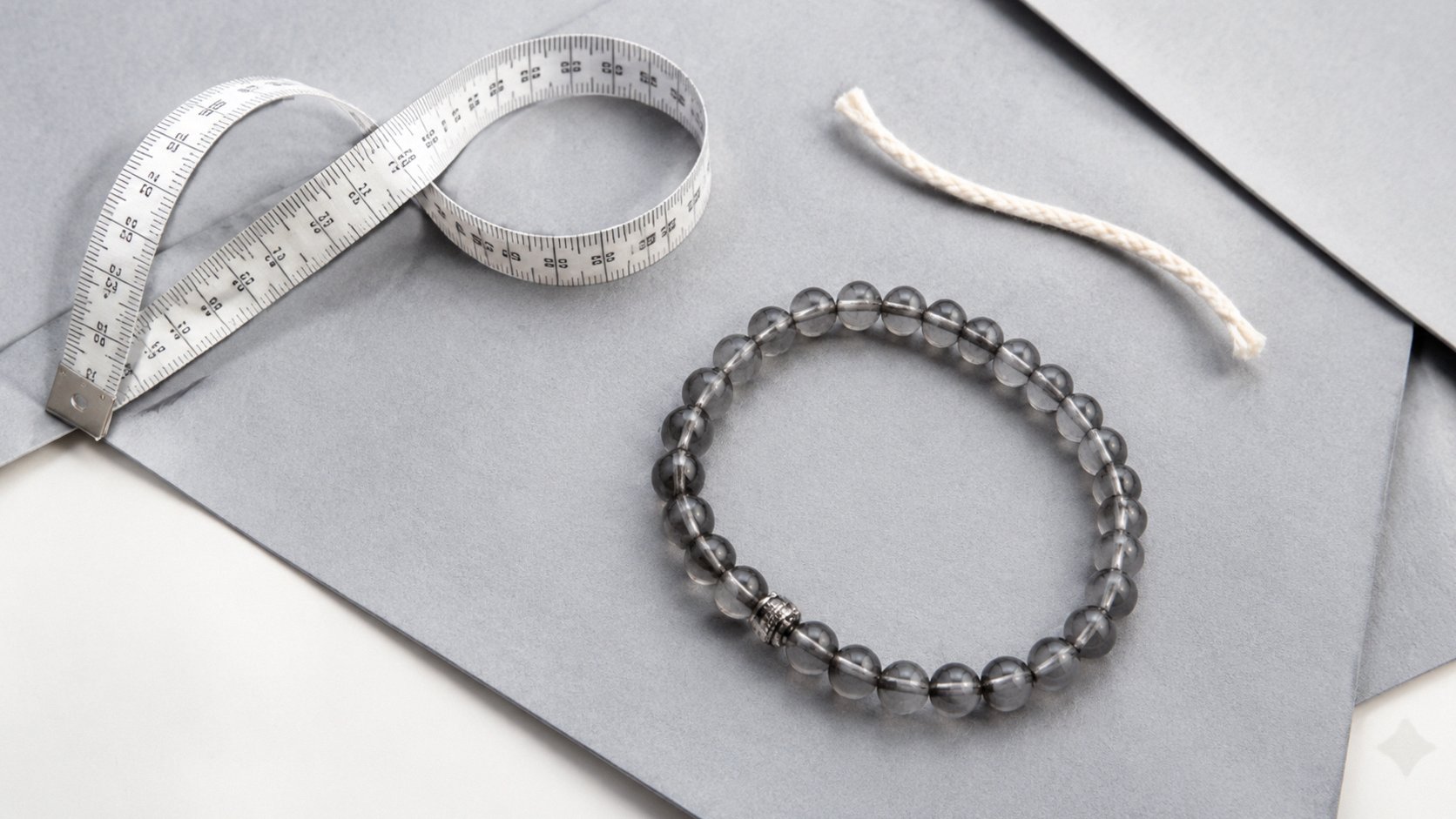
To measure your wrist for a crystal bracelet, wrap a soft measuring tape or a narrow paper strip around the place you plan to wear it. Keep it close without squeezing, record the measurement, and check how the seller defines the bracelet size. Your wrist measurement is the starting point; it is not automatically the finished size to order.
A bracelet should fit into your actual day: typing, pulling on a sweater, reaching for your bag. A few minutes with a tape measure can help you describe what you want much more clearly than choosing “small” or “medium” from a photo.

How to measure your wrist for a bracelet
- Choose the position. Measure the wrist you intend to use, at the point where the bracelet will sit.
- Wrap the tape flat. Keep it against your skin without pulling it tight or adding extra space.
- Use paper or non-stretch string if needed. Mark where the ends meet, lay the strip flat, and measure to the mark with a ruler.
- Repeat and record. Check the result once more. Write down the number in inches and keep the original unit if you converted it.
Tiffany & Co.’s bracelet measuring guide also uses a tape or marked string. Its size chart belongs to its own designs; use the measuring method, then follow the sizing instructions for the bracelet you are actually buying.
Wrist size, strand length and inside fit are different
A listing that says “7 inches” needs a little context. It might describe the wrist the bracelet is intended to fit, the length of the beaded strand, or the space around the inside of the finished bracelet. Ask which measurement it means before comparing it with your wrist.
A useful order question is: My wrist measures 6.25 inches. I prefer a close fit with a little movement. Which size of this design should I choose? This is an example of how to describe your preference, not a finished-size recommendation.
If an order field asks for wrist size, enter the wrist measurement it requests. Do not automatically add an allowance unless the seller tells you to.

Why bead size matters to the finished fit
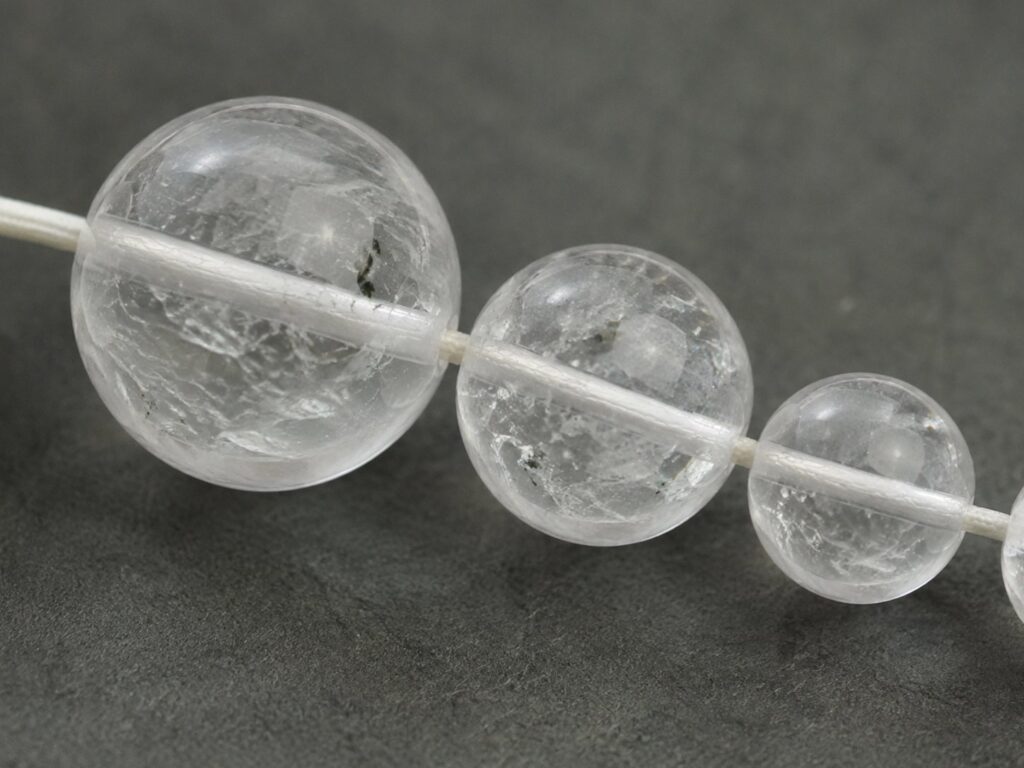
Bead diameter describes one bead. It does not tell you how much space the whole bracelet leaves for your wrist. Larger beads, spacers, focal pieces and the construction can change the fit of a strand.
Fire Mountain Gems’ elastic-bracelet guidance considers both wrist size and bead size when planning length. That is why one universal “add half an inch” rule is not a substitute for the maker’s guidance.
For the visual difference between common diameters, see our 6mm, 8mm and 10mm bead-size comparison. Choose the look you enjoy, then confirm the fit separately.
Describe the fit you want
You do not need a special vocabulary. These observations give a seller something practical to work with:
| What you notice | What to ask or try |
|---|---|
| It presses or pinches. | Take it off and ask about a different size. |
| It slides farther than you like. | Ask which wrist range the design suits and whether a closer fit is available. |
| It is comfortable alone but crowded beside a watch. | Try separate wrists or fewer pieces. |
| The size label is unclear. | Ask whether it means wrist size, strand length or inside circumference. |
Try the combination you actually intend to wear. If you stack pieces farther up your arm, measure at each position rather than assuming one number will suit every spot.
Small components are part of the design
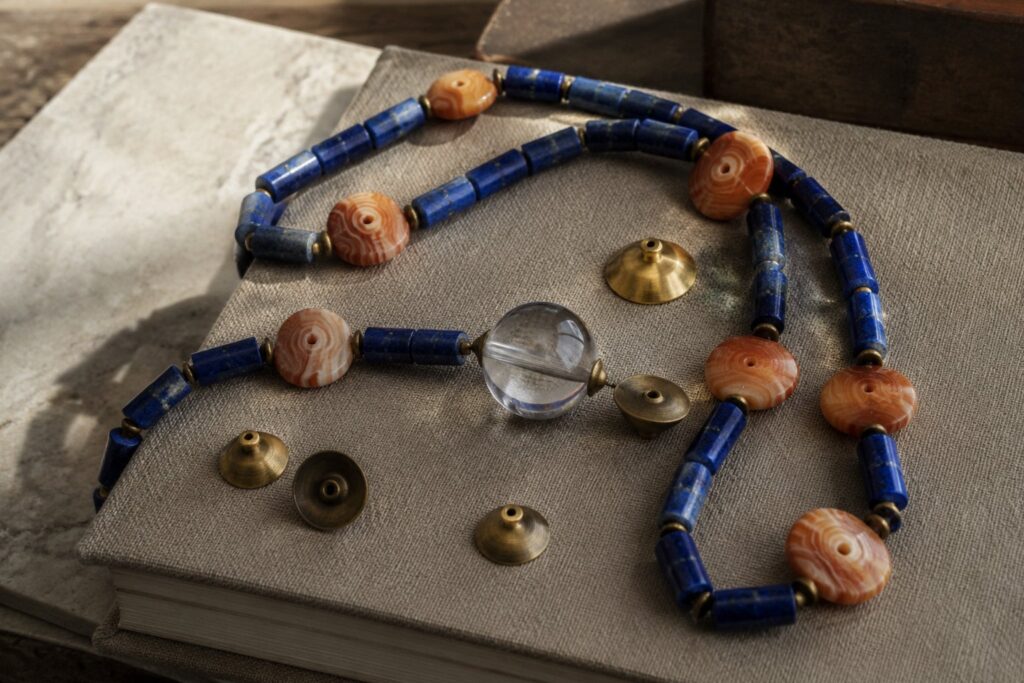
Spacers have a long history in beadwork. The Met records a Middle Kingdom silver spacer made to separate ten strands. It is a useful reminder that a bracelet is an arrangement of parts, not just a row of identical beads. For a modern piece, ask how any spacers, clasp or focal bead affect its finished measurements.
Take three minutes to make a design brief
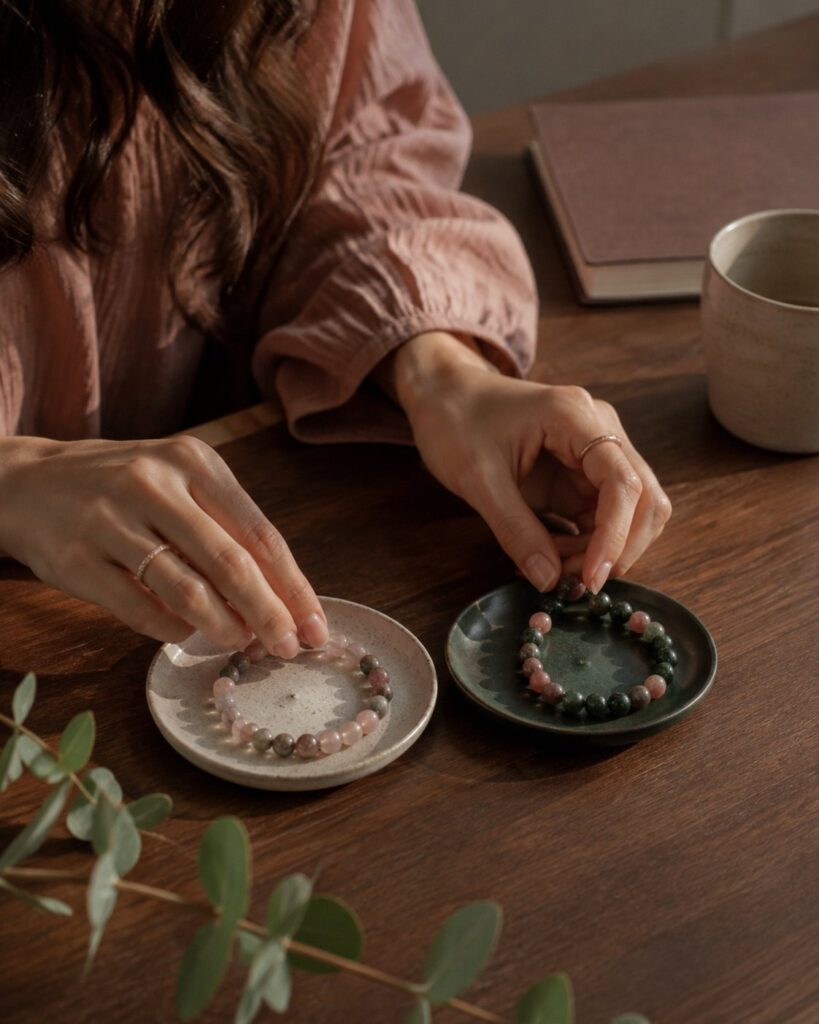
Write down your wrist measurement, your preferred amount of movement and one outfit you want the bracelet to work with. Add a color you already wear often. If you enjoy an intention or Five Element theme, give it one personal sentence: “a reminder to make room for something new” is enough.
For a gift, ask for the recipient’s measurement or discuss an existing comfortable bracelet with the seller, including how it was measured. A photograph or a general demographic size chart is not a precise measurement.
Quick answers before you order
Should I measure tightly?
Keep the tape close without squeezing. Tell the seller whether you like the finished bracelet close or with more movement.
Can I use a bracelet I already own?
It can be a helpful reference. Explain its construction and whether you measured its strand or inside fit; a different bead size may feel different.
Should I stretch a tight bracelet until it fits?
Ask about the correct size or an available adjustment instead of trying to change the fit by pulling on the cord.
What if I wear a watch?
Check both pieces together and describe where each sits. Separate wrists may be more comfortable than squeezing everything into one space.
Once the fit is right, keep pieces separately in storage to limit rubbing. GIA’s jewelry-care guide explains why the materials and storage matter.
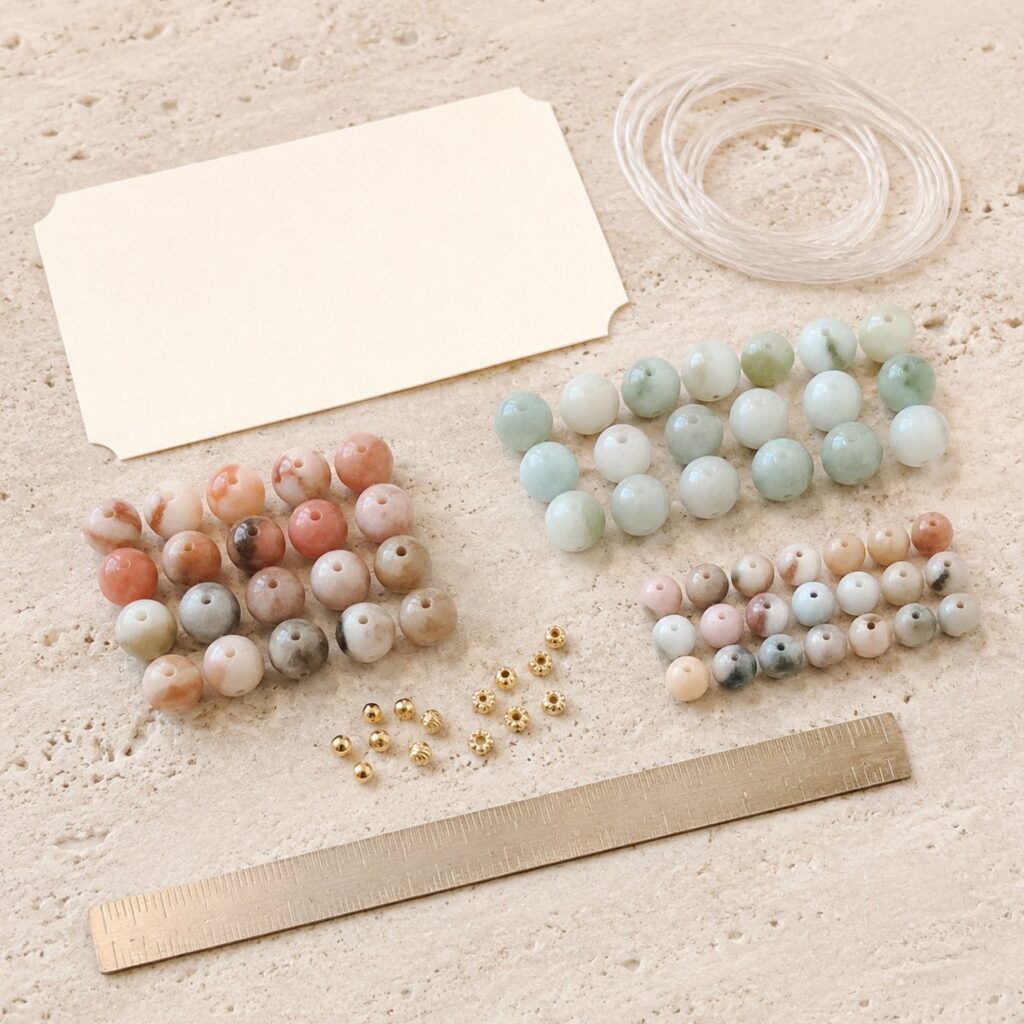
Bring your measurement to your next design
Keep your brief beside you when you explore the WOOXING DIY bracelet designer. Check the currently available components and the sizing method before ordering. A preview helps you consider a design; it does not replace confirmed finished measurements.
Crystal symbolism is personal and is not medical, financial or psychological advice. Illustrations are styling references, not to-scale measuring tools.
Sources and further reading
- Tiffany & Co.: measuring for a bracelet
- Fire Mountain Gems: wrist size, bead size and elastic-bracelet length
- The Met: Middle Kingdom silver spacer, object 25.3.247b
- GIA: caring for jewelry
When comparing a finished piece such as the Amethyst Bracelet with Gold-Tone Charm or Aquamarine Barrel Bead Bracelet with Flower Charm, use the listed bead measurements to picture the design, then confirm the finished inner circumference separately. Your wrist measurement is also a useful starting point when planning a custom bracelet.