

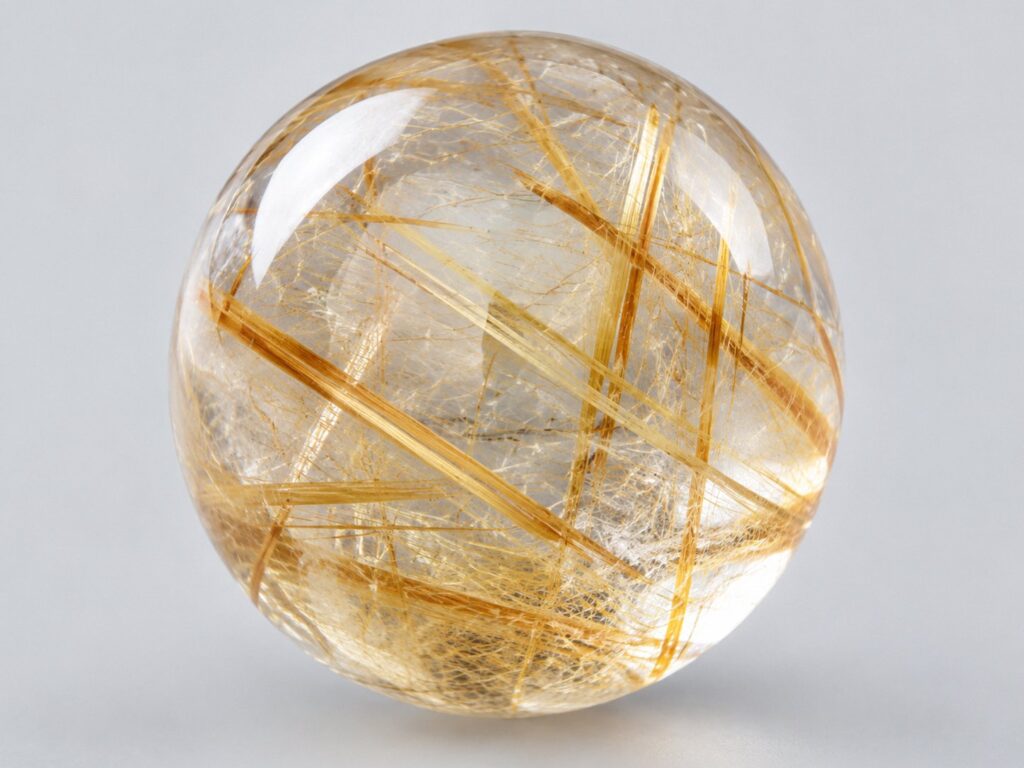
A gold rutilated quartz bracelet can be the little warm detail that makes a plain sweater feel more put together. The golden threads inside the beads are the first thing you notice. But when you’re shopping online, a pretty close-up is only the beginning.
Start with four checks: the named materials, bead diameter, the bracelet’s fit, and any disclosed treatments. Then look at the pattern and color you actually enjoy. You don’t need to become a gemologist to ask good questions.

What are the golden threads inside the beads
Rutilated quartz contains needle-like rutile inclusions. Rutile is primarily titanium dioxide; a golden color does not make those inclusions gold metal. GIA's study of rutile in quartz explains the mineral identity, while its rutile-star study documents an example of the internal pattern.
The visual pattern can vary from a few fine threads to a busier arrangement. GIA has documented golden, copper-colored and reddish examples, including material reported from Bahia, Brazil, in its rutilated quartz field report. That is background on the material, not proof of where a particular bracelet was mined.
If you enjoy the details, our guide to rutilated quartz and other included quartz is a useful next read. For shopping, focus on the individual piece: do you like its overall tone, its bead-to-bead variation and how much of the interior you can see?
How to choose a gold rutilated quartz bracelet
Ask for a clear material description, including any accent beads and metal components. A listing with several stones should name them separately. A trade name can be helpful for finding a style, but you can still ask what mineral it describes.
Ask whether any treatments are known or disclosed and whether identification documentation is available. A photograph can help you assess the look; it cannot conclusively establish identity, origin or treatment history. Our guide to what material information to ask for gives you a practical starting point.
Ask whether the photographs show the exact bracelet or a representative example. Request an ordinary-light image if you want a better sense of the color. More needles may simply be the look you prefer; a dense pattern on its own does not establish authenticity or overall quality.
| Check | Ask | Look for |
| Materials | What are all the beads and components? | Named stones and component details. |
| Bead size | What is the bead diameter in inches, with any stated tolerance? | Measurements rather than photo scale. |
| Fit | Which wrist range does this size suit? | A clear sizing method and fit guidance. |
| Treatments | What is known or disclosed? | Specific information and available documentation. |
Use the buying checklist below if you want to compare these questions with other bracelet materials. Keep the material name separate from the color or mood of a product photograph.
Choose bead size and wrist fit separately
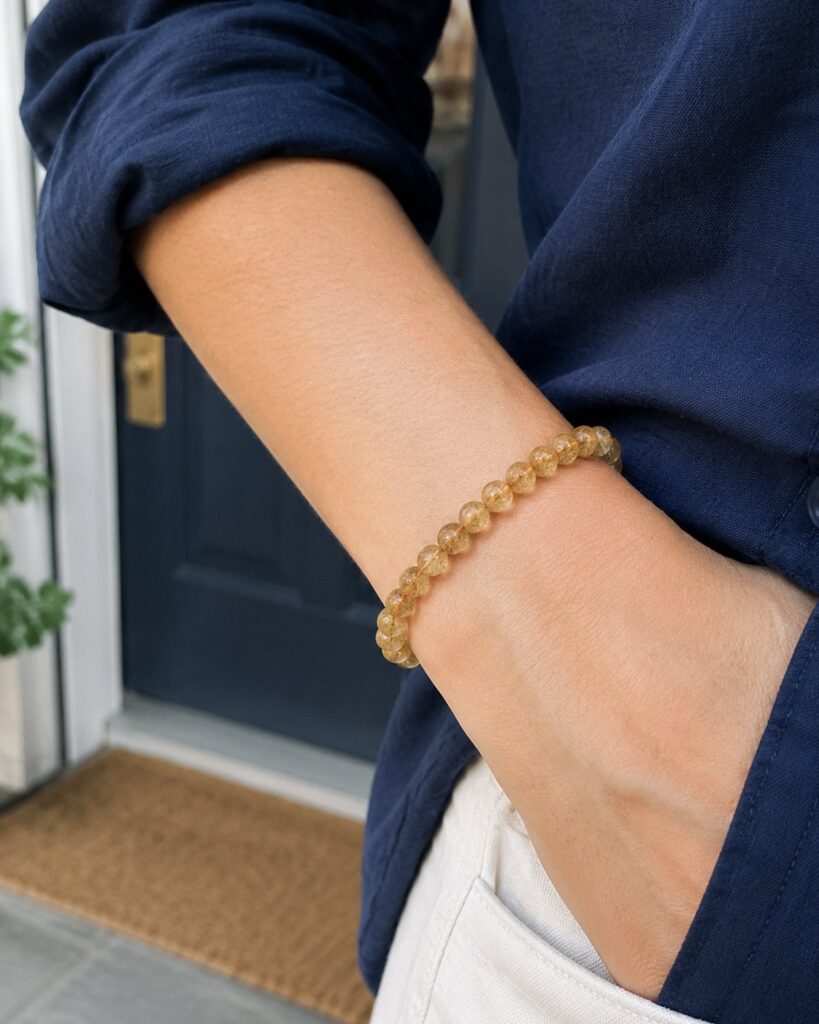
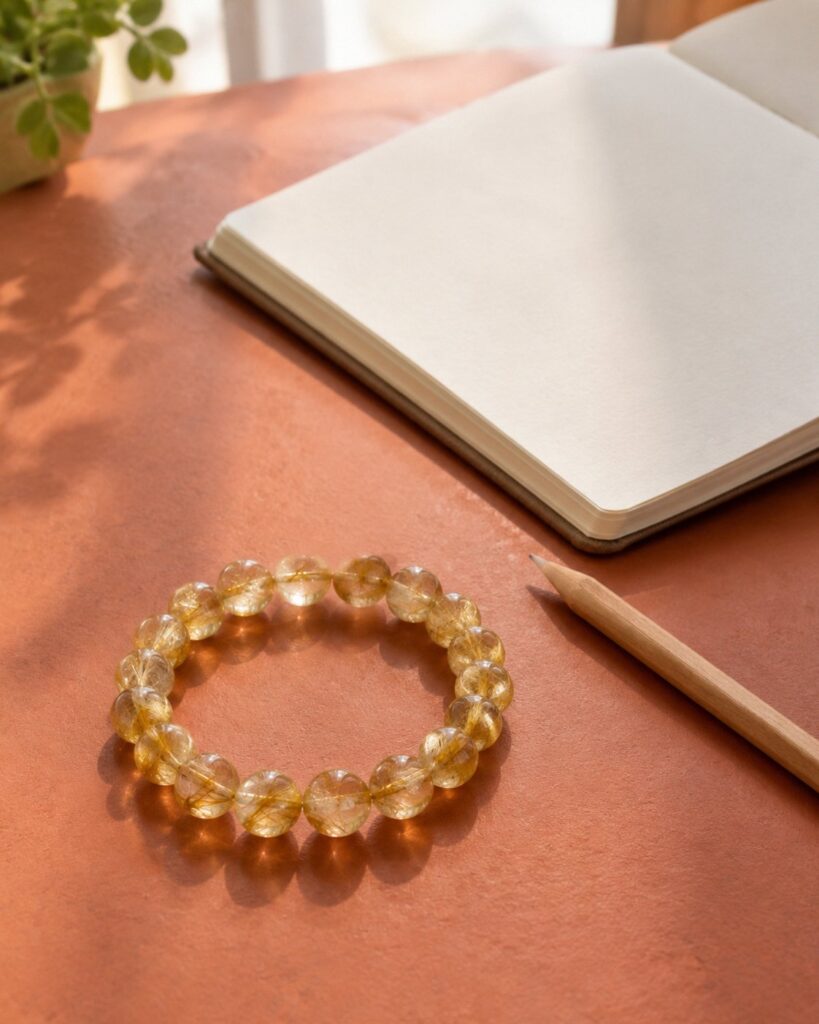
Bead diameter changes how noticeable a bracelet feels. A smaller bead can be easier to pair with a watch; a larger one gives the stone’s pattern more space. These are styling choices, so use measurements and a real wrist photo rather than guessing from a close-up.
Next, measure your wrist before choosing a size. Ask how the seller defines the listed size: wrist measurement, bracelet inner circumference or another measurement. Those numbers are not automatically interchangeable. Bead size, spacers and construction all affect the fit.
Before ordering, confirm the recommended wrist range and any resizing options. If those details are missing, ask first. A bracelet should suit the way you move through a normal day, including typing, carrying a bag and pulling on a sleeve.

A different warm-colored WOOXING option
If you like a warm palette but are not specifically seeking rutile needles, consider the Yellow Quartz Bracelet with Gold-Plated Flower Bead. Its current materials are yellow quartz sold as Yellow Ase, a gold-plated hydrangea bead and other gold-tone details. This is a separate yellow-quartz option, not a confirmed rutilated-quartz example. Choose it for the color and floral detail, and check the listed measurements and fit information.
Think of the intention as a personal prompt: what would you like to build more steadily? It might be a small routine you can keep returning to. The bracelet can carry that meaning without promising a financial result.
A small jewelry story behind the material
Rutilated quartz also appears in contemporary art jewelry. The Smithsonian American Art Museum records Eleanor Moty’s 1999 brooch Kata as a work made with rutilated quartz, sterling silver and 18k and 14k gold. It is a documented example of a designer choosing this material for a finished jewel.
For your own bracelet, take the simpler design lesson: give an interesting stone room to be seen. You can keep the surrounding colors quiet and still end up with something that has plenty of personality.

Three ways to make the warm tones feel like you
For an everyday outfit, try the golden tones beside an oatmeal sweater and dark denim. For work, let a navy sleeve provide contrast. For dinner, wear one bracelet with a simple dark top and leave a little space around it.
You don’t have to match every metal exactly. Try the bracelet beside jewelry you already wear, then decide whether the mix feels comfortable to you. One piece can be enough.
Care for the whole bracelet
Consider the cord and any accent materials as well as the quartz. GIA’s jewelry care guidance explains why heat, chemicals, treatments and cleaning methods matter. For an assembled bead bracelet, start with a soft dry cloth, avoid perfume and household cleaners, and store it separately. Ask the maker before soaking it or using steam or an ultrasonic cleaner. Follow care instructions for the most delicate component.
A three-minute intention you can make your own
If symbolism is part of the appeal, use it lightly. WOOXING places the Yellow Quartz Bracelet with Gold-Plated Flower Bead in its Earth collection. You can connect its warm palette with a personal intention of steadiness, then choose one practical habit to support that intention.
Take one minute to name something you want to be consistent about. Spend the next choosing a small action you can do today. Use the last minute to decide when you’ll do it. Let the bracelet remind you of that action when you notice it later.
Build a simple DIY design brief
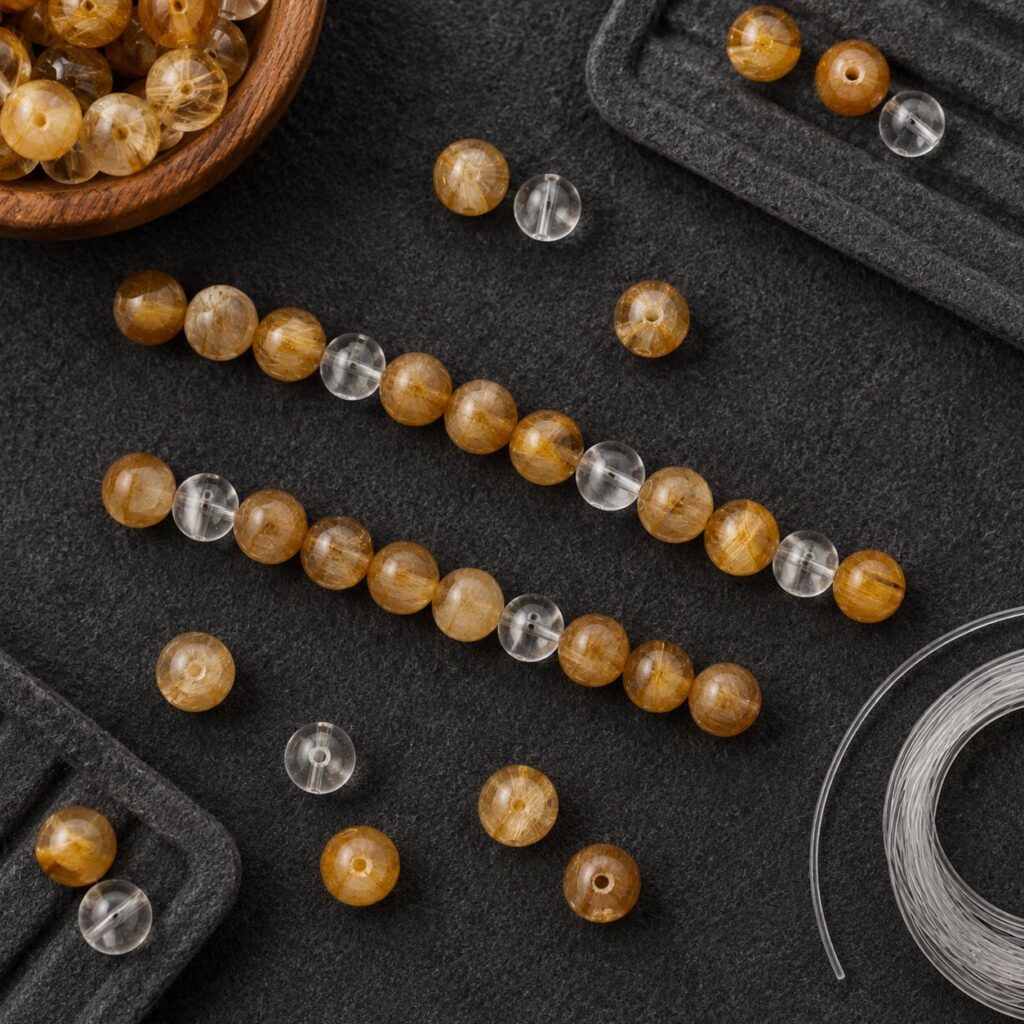
Start with a warm main color and decide whether you want the bead pattern to look quiet or more noticeable. Keep one repeating arrangement for your first version. If you want a neutral or a small accent, try just one addition and compare the result.
Write down your wrist measurement, preferred bead scale and the clothes you want to wear it with. Explore the materials currently offered in the tool; a ready-made product does not mean the same stones or design are available for every custom order.
Quick questions before you choose
Are the golden needles actual gold? In rutilated quartz, the needles are rutile, not gold metal.
Can a photo prove a bracelet is natural and untreated? No. Photos show appearance; those claims need appropriate supporting information.
Is a bracelet with more needles always better? Choose the pattern you like, while checking material disclosure, condition, construction and fit. Needle density alone is not a complete buying standard.
What if the listing doesn’t give a wrist size? Ask for the bracelet’s sizing method and recommended wrist range before ordering.
Choose your next step
Have a color direction in mind? Design your own crystal bracelet and explore the current options with your wrist measurement and everyday style in mind.
Crystal meanings, Five Element themes and zodiac associations are optional personal symbolism, not medical, psychological or financial advice.
Sources
GIA — Well-Formed Rutile Star in Quartz
GIA — Varieties of Rutilated Quartz