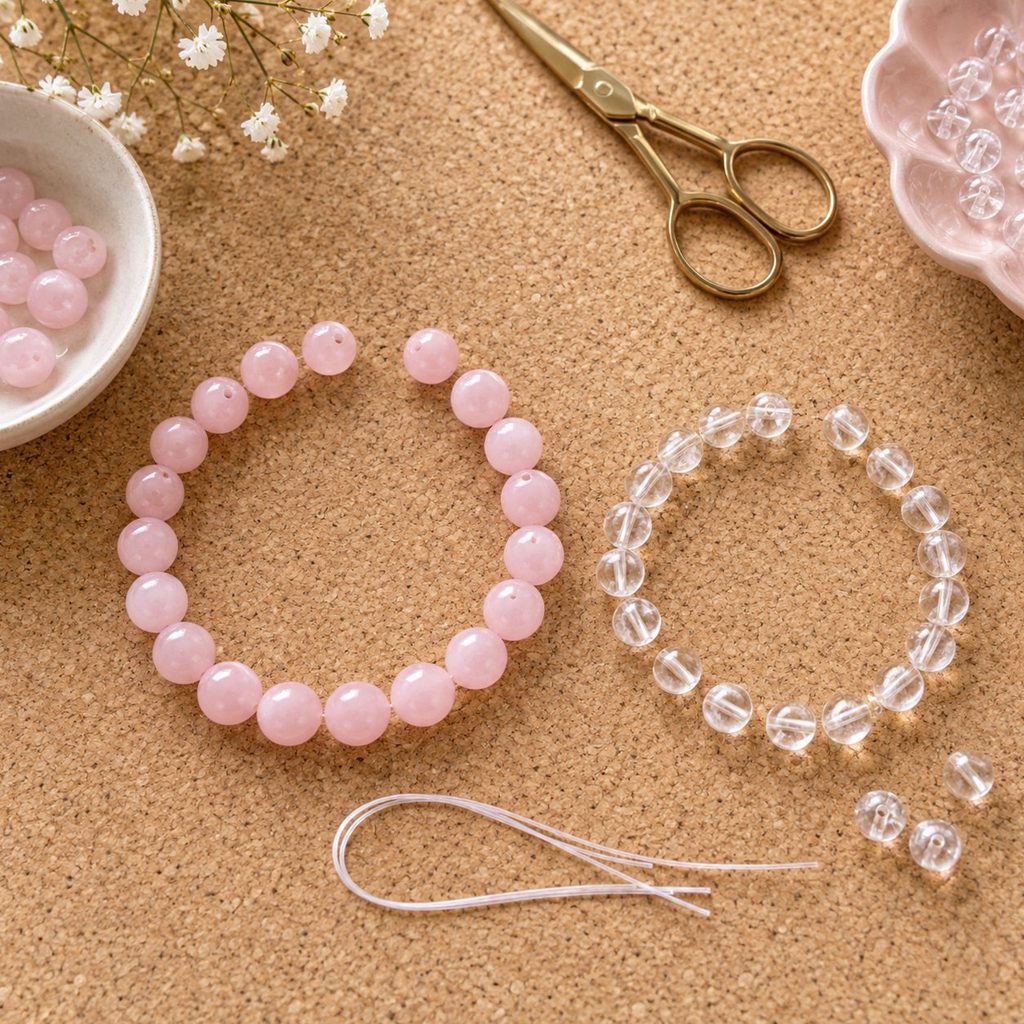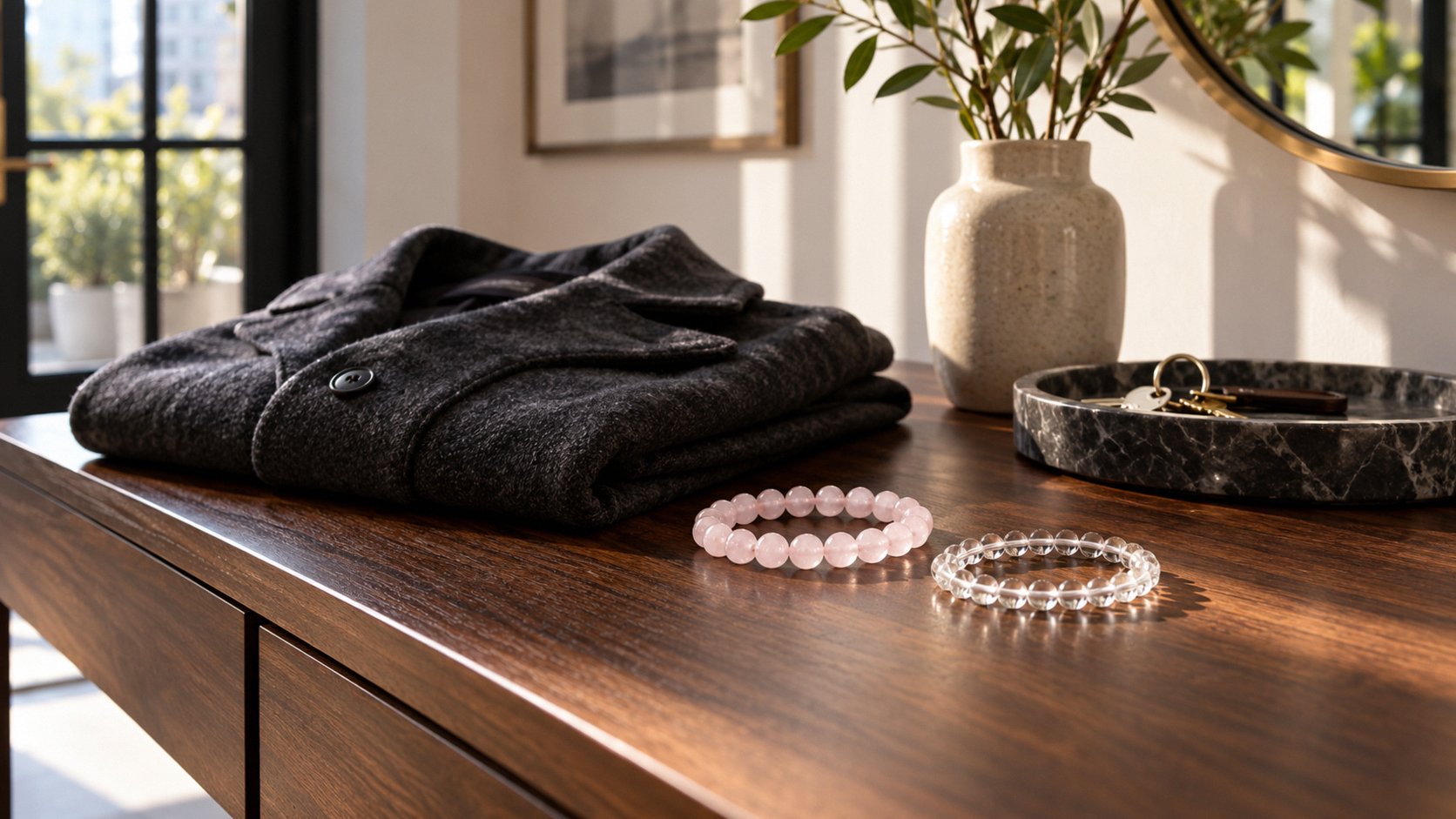
A bracelet stack has to work when you type, move your wrist and pull on a sleeve. Start with two pieces, then check what happens where they touch.
Yes, you can wear multiple crystal bracelets. Start with two and see how they feel through an ordinary day. A third is optional, not a target. The most useful limits are fit, weight, rubbing, and whether the stack works with your sleeves and the things your hands need to do.
Choose one bracelet you already enjoy wearing, then test a quieter companion during your usual tasks. This guide focuses on fit, rubbing and watch contact. For color and layout ideas, use our three crystal-bracelet stacking formulas.
Check each bracelet before testing the stack
Check each bracelet on its own first. Notice pinching, unwanted sliding or a clasp that catches before adding the second piece. Then bend your wrist and turn your hand: the stack should leave room for those movements without pushing either bracelet into an uncomfortable position.
Try a smaller companion beside a medium-size bead bracelet rather than making every strand equally bold. Two slim strands may feel easier under a cuff than several large-bead bracelets. For visual comparisons before choosing, see our bead-size guide. Check each bracelet’s fit separately, then test the combination; a stack takes up more of your forearm than a single strand.
Know the material before you judge the finish
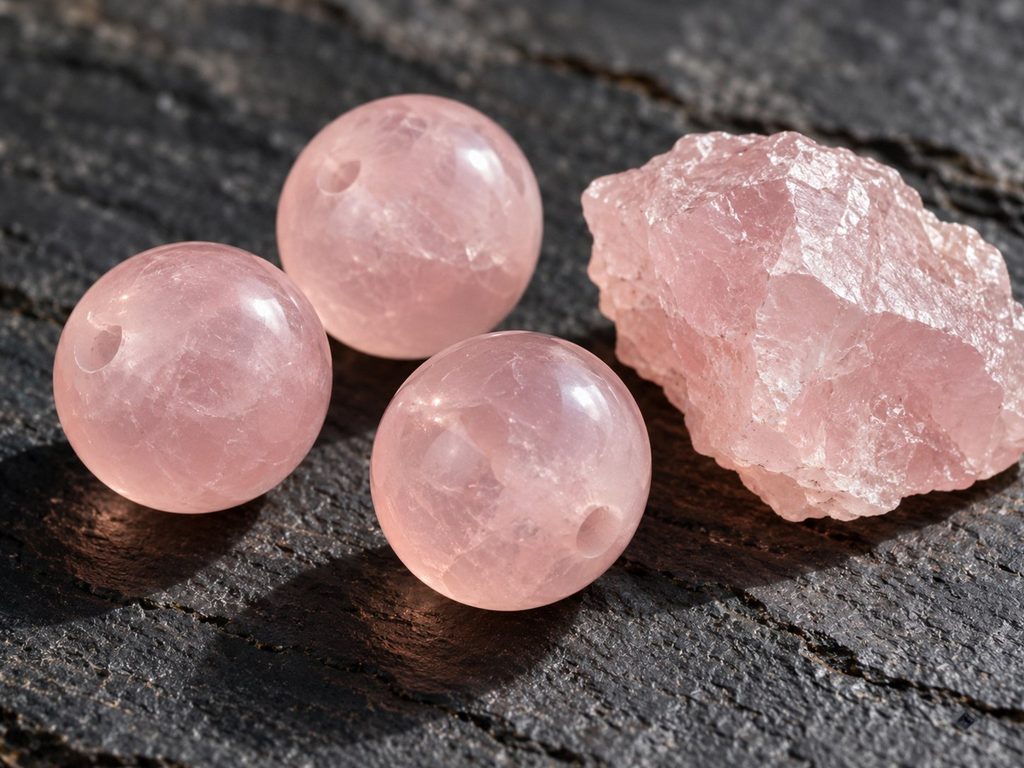
Rose quartz is a pink variety of quartz. GIA’s rose quartz guide describes the cloudy translucence often seen in this material and notes its use in beads and cabochons. That appearance can be lovely beside clear or darker beads, but a photograph cannot establish a particular bracelet’s identity, treatment, or origin.
A soft-looking color does not mean a soft mineral. GIA’s durability guidance distinguishes hardness, toughness, and stability: resistance to scratching is different from resistance to breaking and environmental damage. Ask for the actual materials and care instructions, including those for cord, plating, and decorative parts. A polished surface alone cannot tell you whether two pieces will tolerate repeated contact.
A small design lesson from paired jewelry
The Metropolitan Museum of Art catalogs a gold object titled Bracelet, One of a Pair, dated to the eighteenth or nineteenth century and attributed to Central or Southern India or Sri Lanka. The record offers a documented example of jewelry conceived as a pair; it does not establish modern crystal-stacking rules or prove how the pair was worn.
Our contemporary styling takeaway is modest: pieces can relate without being identical. Repeat a color, a bead proportion, or a metal tone, then let one detail vary. The modern bead illustrations here are design inspiration, not photographs or reconstructions of that museum object.
Try three everyday combinations
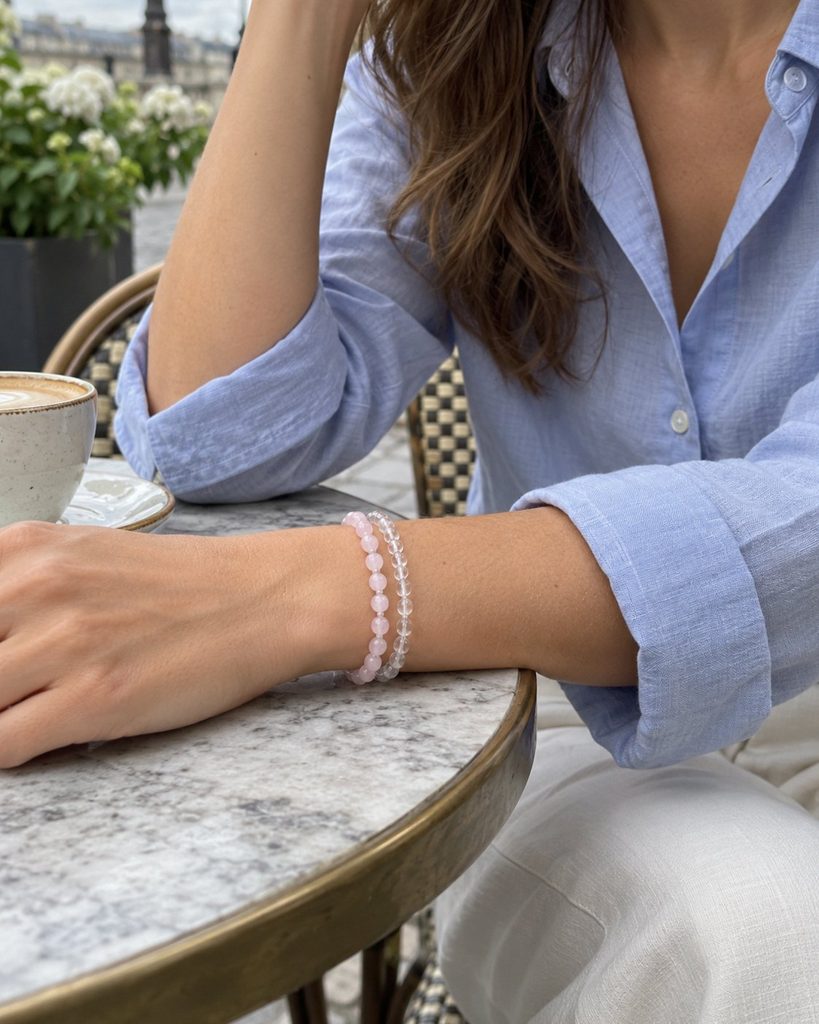
Soft and simple: pair pale pink beads with a smaller clear strand and a blue shirt. Keep the sleeve loose enough to move without catching.
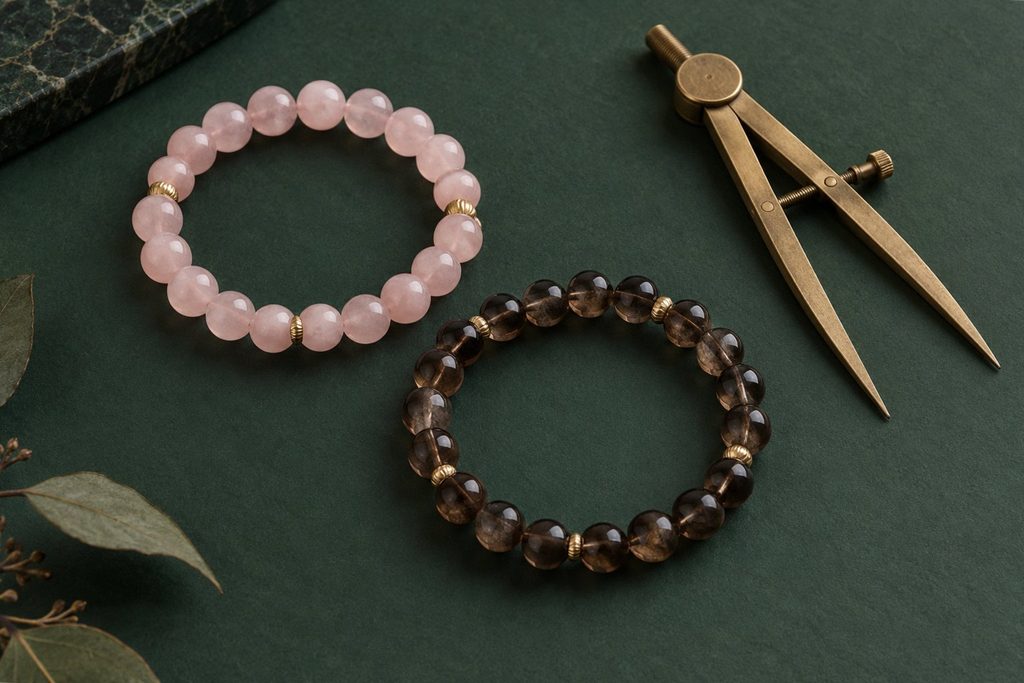
Earthy and understated: combine muted green with smoky brown beside oatmeal knitwear. Confirm what the green beads actually are before borrowing care advice for another green gemstone. Color is a styling cue, not a mineral identification.
Desk to dinner: wear one bead bracelet during work, then try a fine chain for the evening. If the chain catches, twists around the cord, or repeatedly strikes the beads, wear the pieces on different wrists instead. You do not have to keep every piece together to make an outfit feel coordinated.
Test sleeves, typing and watch contact
Before leaving home, type a short sentence, lift a mug, and slide your sleeve over the stack. Notice whether a bead presses into your wrist, a charm catches, or the bracelets keep knocking against the desk. Remove a strand or adjust the combination if it distracts you. This quick check is a practical habit, not a guarantee of all-day comfort.
If you wear a watch, start with bracelets on the other wrist. When you try them on the same side, watch for contact with the case, crown, and strap hardware as your hand moves. A gap while you are sitting still may disappear during use. Repeated rubbing or knocking is a reason to separate the pieces, even if both seem durable.
Do not tighten a bracelet to hold a stack in place. It should not pinch or leave you uncomfortable. For a new size, use our wrist-measuring guide and the specific maker’s sizing instructions rather than adding an arbitrary amount for every bracelet.
Care for the whole bracelet
GIA lists rose quartz at Mohs hardness 7 and recommends avoiding ultrasonic and steam cleaning. Its warm-soapy-water guidance is for the gemstone; it is not permission to soak an assembled bracelet whose elastic, finishes, or other components may need different care. Follow the maker’s instructions for the complete piece.
Until you know those instructions, use a soft dry cloth and avoid soaking. Take bracelets off before cleaning chores, swimming, or activities that cause repeated impact. Store pieces separately so beads, chains, and metal details do not rub together in a crowded pouch. Check elastic and closures regularly, and stop wearing a piece if the cord is visibly worn or the fastening feels unreliable.
Keep symbolism personal
You do not need a list of forbidden crystal pairings to choose an outfit. Zodiac themes or Five Element color associations can be optional creative prompts, but they are not scientific tests of compatibility or a reason to ignore fit and material care. Different traditions and sellers may use different associations.
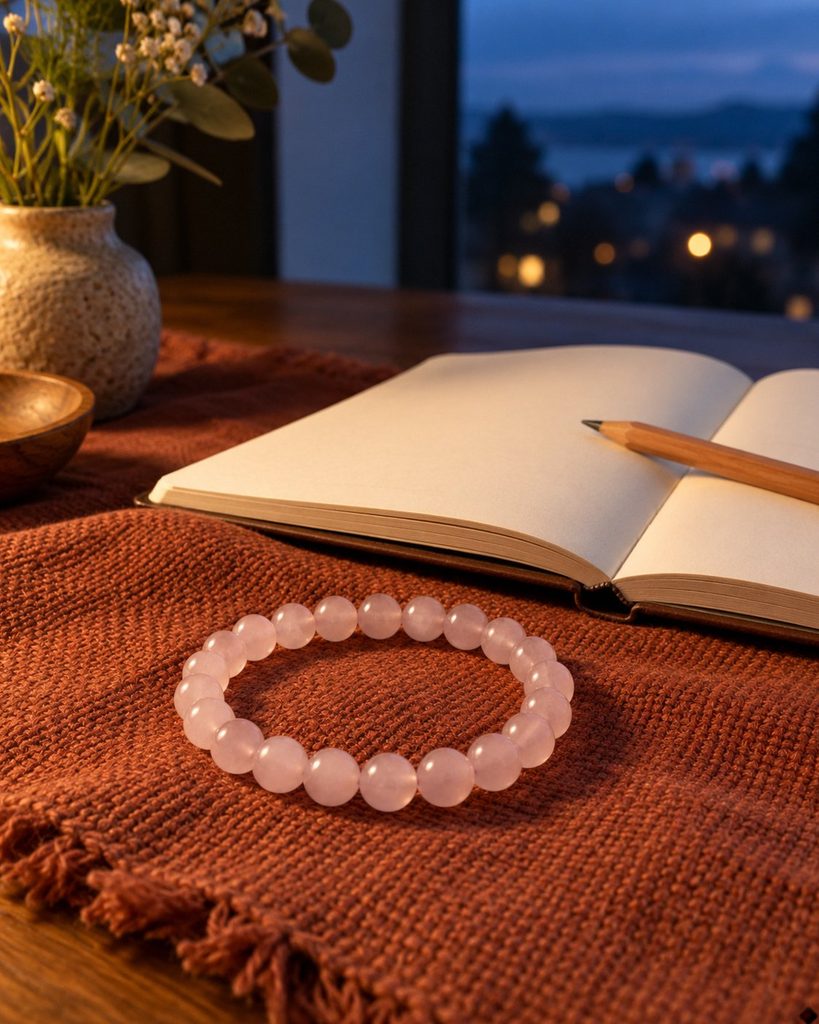
For a three-minute personal ritual, lay out two bracelets, choose a word such as patience, and write one small action that would express it today. Then put on only the pieces that feel comfortable. The reminder comes from your chosen practice; the stones do not promise an emotional, medical, or financial outcome.
Frequently asked questions
How many should I wear? Start with two. There is no universal ideal count; weight, fit, and your activities matter more than a number.
Can I mix different stones? Yes as a styling choice, but check the materials and avoid combinations that rub, snag, or repeatedly collide. Color matching alone does not establish durability.
Must I use one particular wrist? No styling rule requires it. Choose the side that interferes least with your daily tasks, and consider keeping bracelets away from your watch.
Does a larger stack have stronger effects? This guide makes no such claim. Crystal symbolism is personal and is not medical, psychological, or financial advice.
Build a stack around your own routine
For a custom design brief, note your wrist measurement, preferred fit, usual sleeve style, and whether you wear a watch. Choose one main color, then a smaller or quieter companion. Request confirmed bead materials, sizes, construction details, and care instructions before deciding. The illustrations suggest possibilities rather than confirmed stock.
Want a starting point you can adjust? Explore the WOOXING DIY bracelet designer and begin with the bracelet you would happily wear on its own. Add a companion only when it earns its place in your day.