
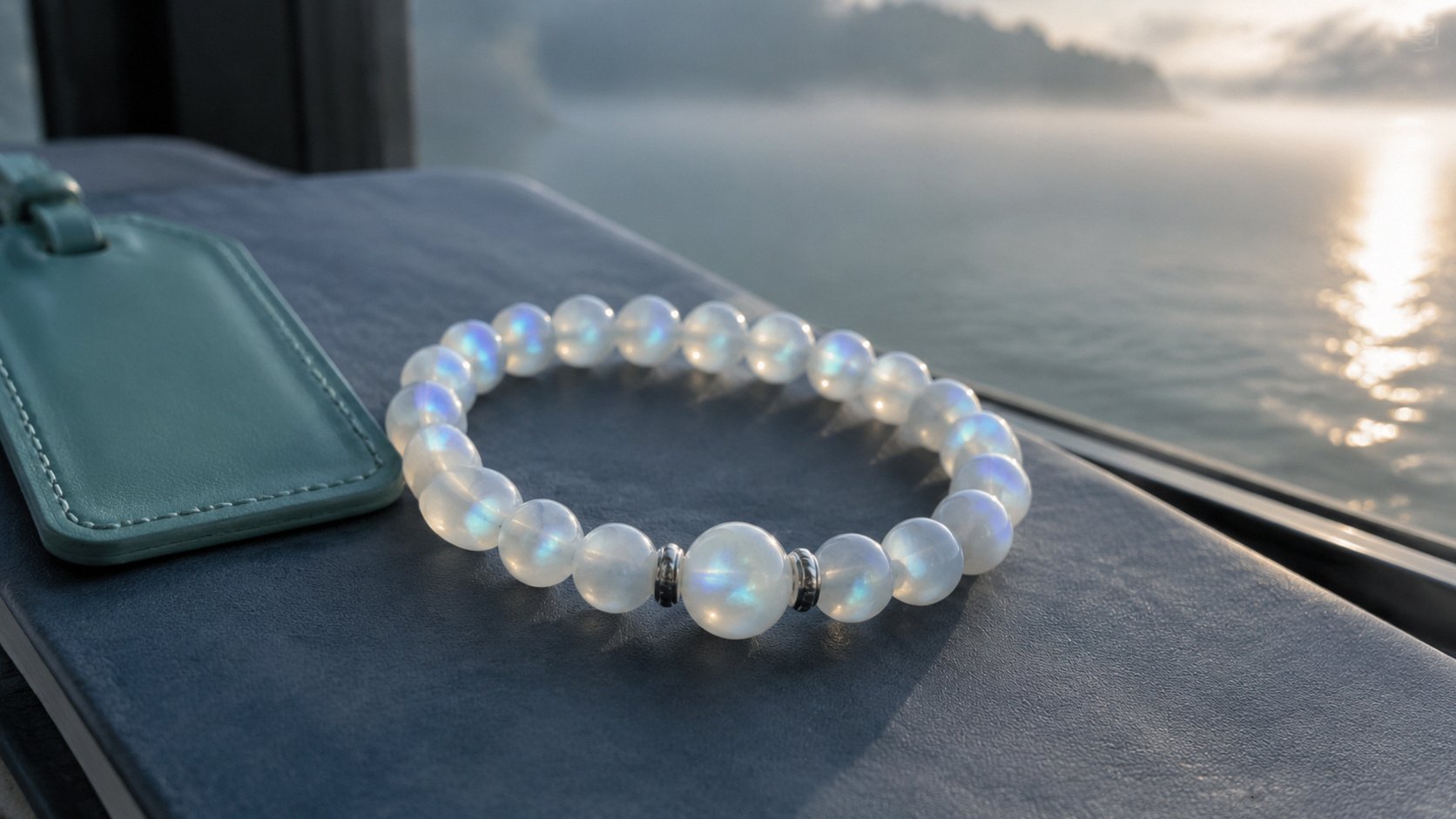
A new beginning does not have to arrive with a dramatic announcement. Sometimes it is a suitcase packed the night before, a changed calendar, a new apartment key, or a quiet decision to move at your own pace. A moonstone bracelet can be a beautiful companion to that in-between feeling: soft, luminous, and easy to make personal. In crystal culture, moonstone is often linked with intuition and transitions. Take that as a reflective prompt, not a promise about what a stone can do for your body, relationships, or future.
Moonstone is also one of the few pale gemstones that changes with the light. Its blue or white glow can make a simple bead bracelet feel considered rather than plain. Here is the real material story, a documented design history, and a practical way to build a new-chapter bracelet you will actually wear.
What Is Moonstone?
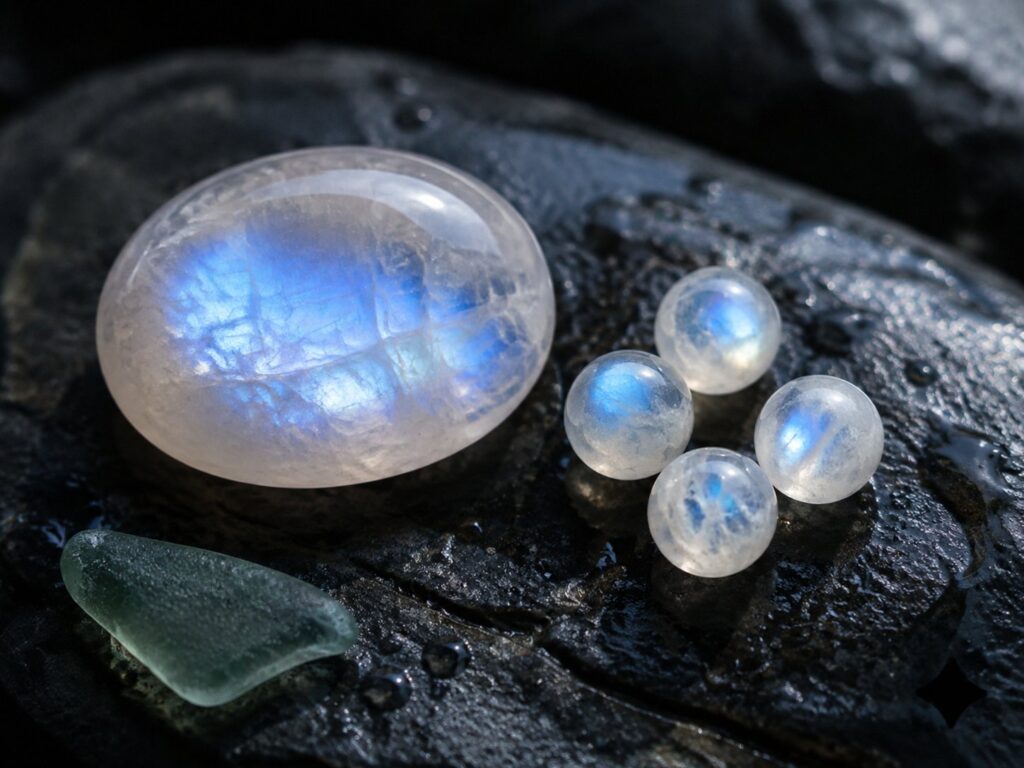
Moonstone is gem-quality feldspar, most commonly a layered mix of orthoclase and albite. Those microscopic layers scatter light and create adularescence: a billowy glow that seems to move just below the surface as the stone turns. GIA notes that the finest traditional moonstones are nearly colorless and transparent with a mobile electric-blue sheen. “Rainbow moonstone” is a trade name often used for labradorite with a multicolored sheen, so it is worth asking a seller what feldspar material you are choosing.
History, Lore, and Origins
Many cultures connected moonstone with moonlight long before gemology could explain its optical effect. Hindu mythology described it as solidified moonbeams; Roman and Greek traditions linked it to lunar deities. These stories are cultural lore, not evidence of a supernatural power, but the visual association is easy to understand when light rolls across the gem.
Moonstone is found in several places, with India and Sri Lanka among the most important historic sources. GIA also lists Brazil, Madagascar, Myanmar, Tanzania, and locations in the United States. Origin can add context, but it should not replace a direct look at the qualities that make a bead special: body color, sheen, translucency, cut, durability, and treatment disclosure.
A Moonstone Jewelry Story Worth Knowing
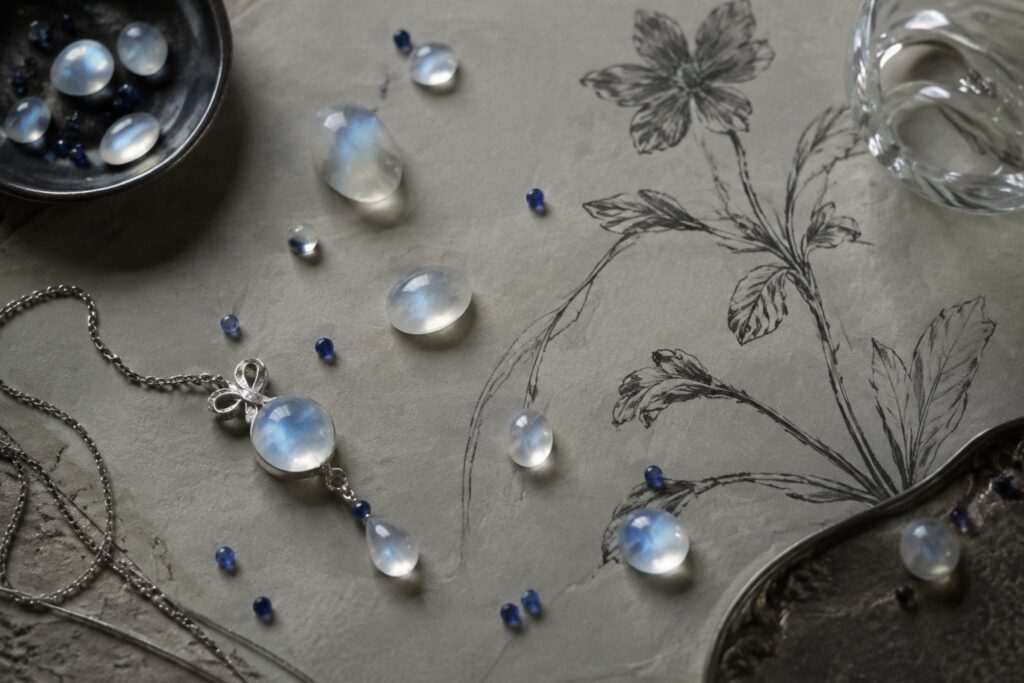
Moonstone became a favorite material for Art Nouveau designers such as René Lalique and Louis Comfort Tiffany, who valued color, light, enamel, and natural forms as much as conventional gem status. The Metropolitan Museum of Art holds a circa-1910 Tiffany & Co. necklace with moonstones, Montana sapphires, and platinum. One of the most elaborate surviving examples of its type, it can be worn as a long necklace, a choker, a bracelet, or a separate brooch—a wonderfully early example of jewelry designed for changing moods and occasions.
There is no transparent, universally accepted “most valuable moonstone jewel” record. A clear documented benchmark is René Lalique’s Art Nouveau moonstone, diamond, enamel, and glass pendant, which Christie’s reported sold in Geneva in 2017 for CHF408,500 (US$411,012). That result belongs to a signed Art Nouveau work with diamonds, enamel, glass, provenance, and craftsmanship; it should not be read as the price of moonstone alone. The useful takeaway is that designers have long treated moonstone as a material of movement, not merely a pale accent.
Moonstone Meaning: Make Space for the Next Chapter
In contemporary crystal practice, moonstone is often chosen as a symbol of new seasons, intuition, and gentleness during change. Keep the symbolism personal. It might remind you to leave a little room before answering a big question, to notice what has shifted, or to celebrate a milestone without turning it into a performance. In Five Element-inspired color styling, white, pearl, and silvery tones are often read through Metal: discernment, refinement, and making space. This is a visual reflection system, not a scientific assignment.
Moonstone is a June birthstone alongside pearl and alexandrite. In zodiac styling, Cancer and Libra are often drawn to its soft, lunar palette, but any sign can use it as a light-catching neutral. The best match is not a rulebook; it is the moment you want the bracelet to mark.
When to Wear a Moonstone Bracelet
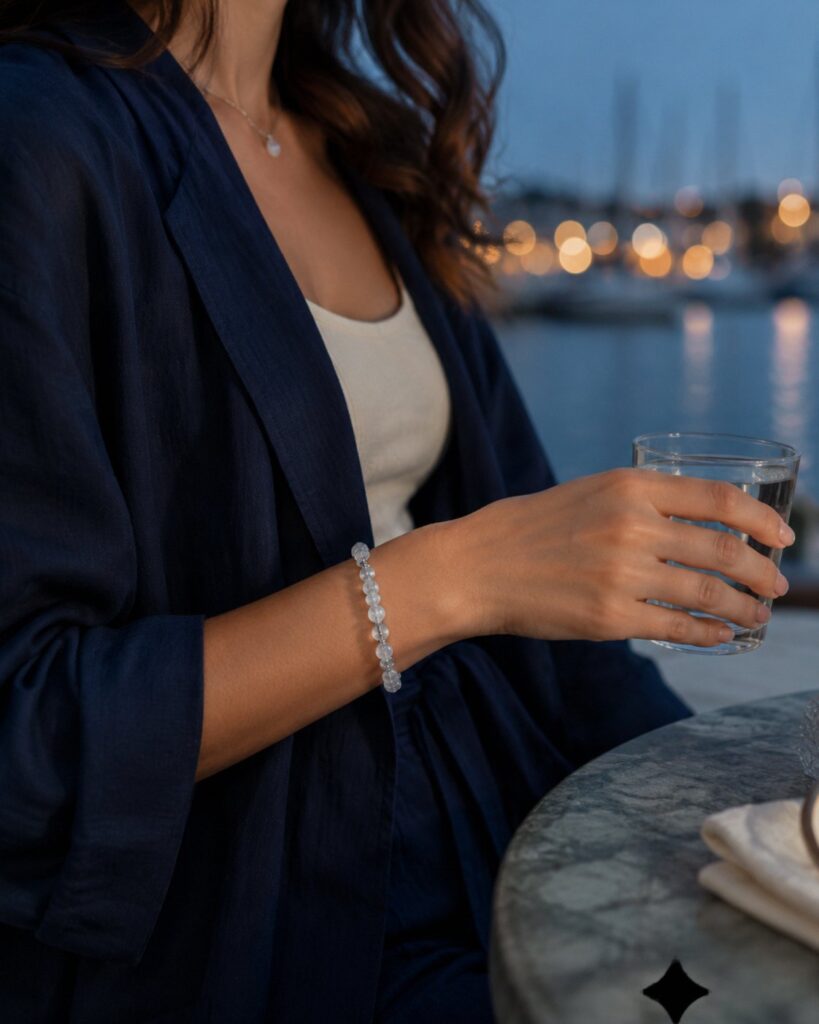
Choose moonstone for a trip, a first day, a creative reset, or an evening when you want your jewelry to look quietly luminous in low light. It pairs beautifully with navy, misty blue, charcoal, cream, soft green, and silver. For a cool, minimal stack, use moonstone with clear quartz and silver spacers. For warmth, add peach moonstone or a small gold detail. For depth, place one smoky quartz focal bead near the center. Let the flash do the work; the rest of the palette can stay simple.
Moonstone Care: Gentle Is the Whole Point
Moonstone ranks 6 to 6.5 on the Mohs scale and has poor toughness because feldspar has cleavage directions that can break under a hard blow. GIA recommends warm soapy water as the only cleaning substance and advises against ultrasonic and steam cleaners. Avoid high heat, sudden temperature changes, hard knocks, and long soaking of an elastic bracelet. Dry it fully, store it separately from harder gems, and let a jeweler inspect a cracked or loose stone instead of trying to repair it at home.
A Four-Minute New-Season Ritual
Set your bracelet beside your calendar or overnight bag. Write one sentence: “I am making room for ______.” Choose something specific and kind, such as a new routine, one conversation, or a little less rushing. Take four slow breaths, look at the moving light in the bead, and name one small action you can do today. Put the bracelet on as a reminder to keep the next step human-sized. This is a mindfulness exercise, not a prediction or guarantee.
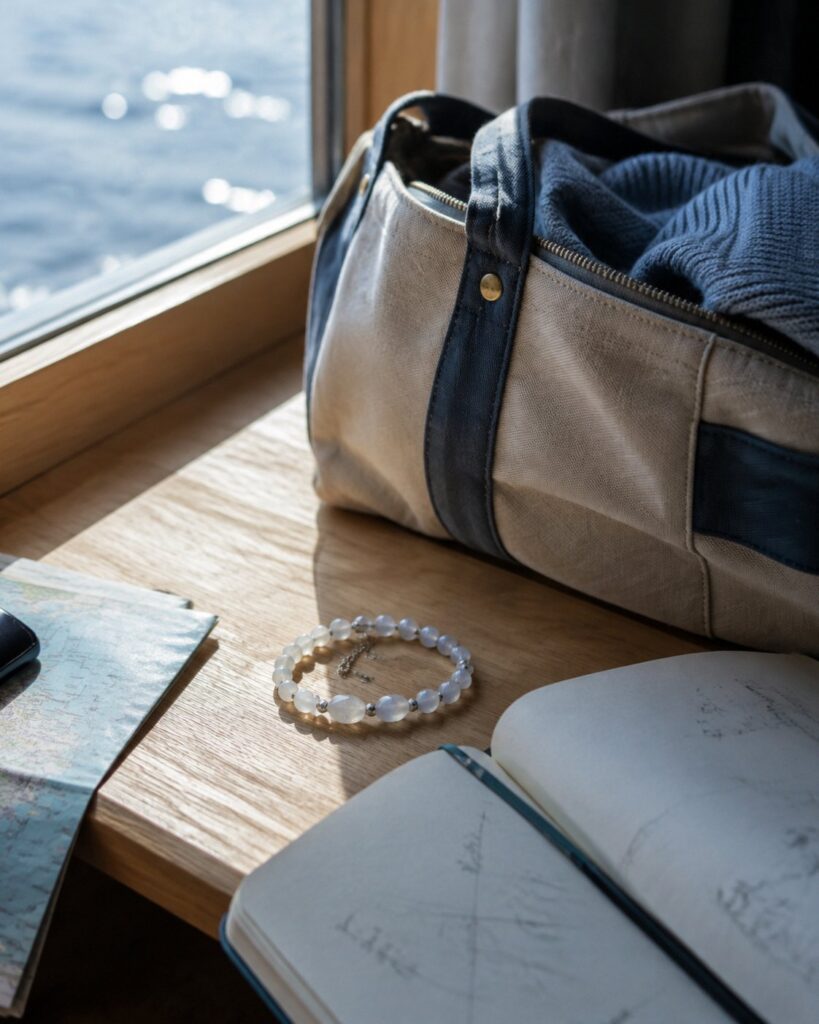
Design Your New-Chapter Bracelet
Start with 8 mm white or blue-flash moonstone beads, one 10 mm focal bead, and two polished silver spacers. Add clear quartz separators to lift the light, or one peach moonstone accent for warmth. A single smoky quartz bead keeps the palette grounded for everyday wear. Because moonstone is more vulnerable to knocks than quartz, choose a fit that does not slide loosely over your wrist and reserve it for moments when its glow can be enjoyed. Build your version at DIY Wooxing.
Crystal symbolism, zodiac references, Five Element language, and intention rituals in this article are offered as personal reflection only. They are not medical, financial, or psychological advice, and they do not guarantee an outcome.

Create your moonstone bracelet for the chapter you are stepping into: https://diy.wooxing.com
Sources included in the blog copy
• GIA — Moonstone identity, adularescence, and quality factors
• GIA — Moonstone history and Art Nouveau context
• GIA — June birthstone origins and care
• The Metropolitan Museum of Art — Tiffany moonstone necklace with pendant
• Christie’s — Lalique moonstone, diamond, enamel and glass pendant result